
That’s the question asked by the SEAS project team, led by Dr Jajati Mandal of the University of Salford, in this blog which shares learnings gathered through his Coast-R Small Grants Funded project.
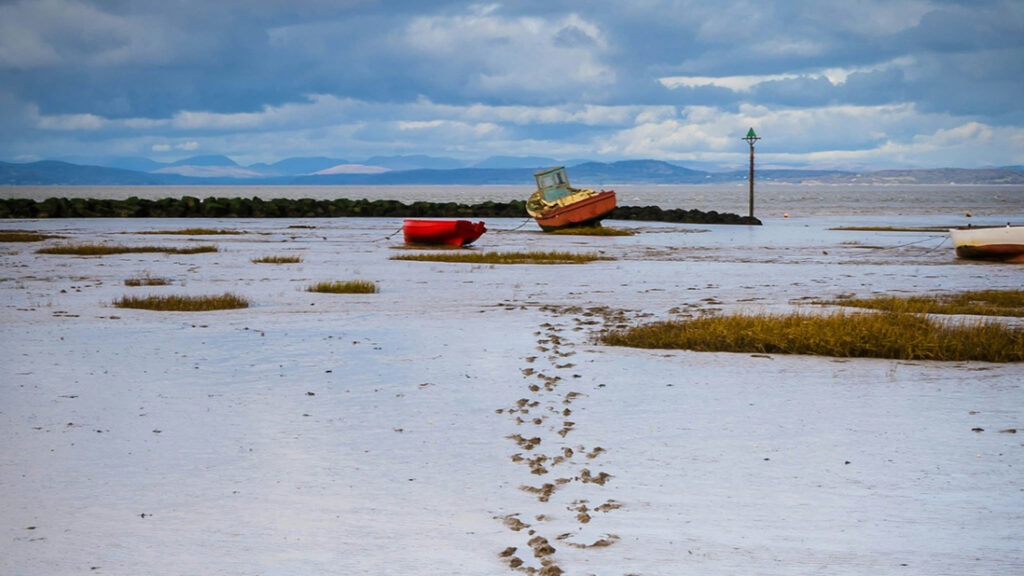
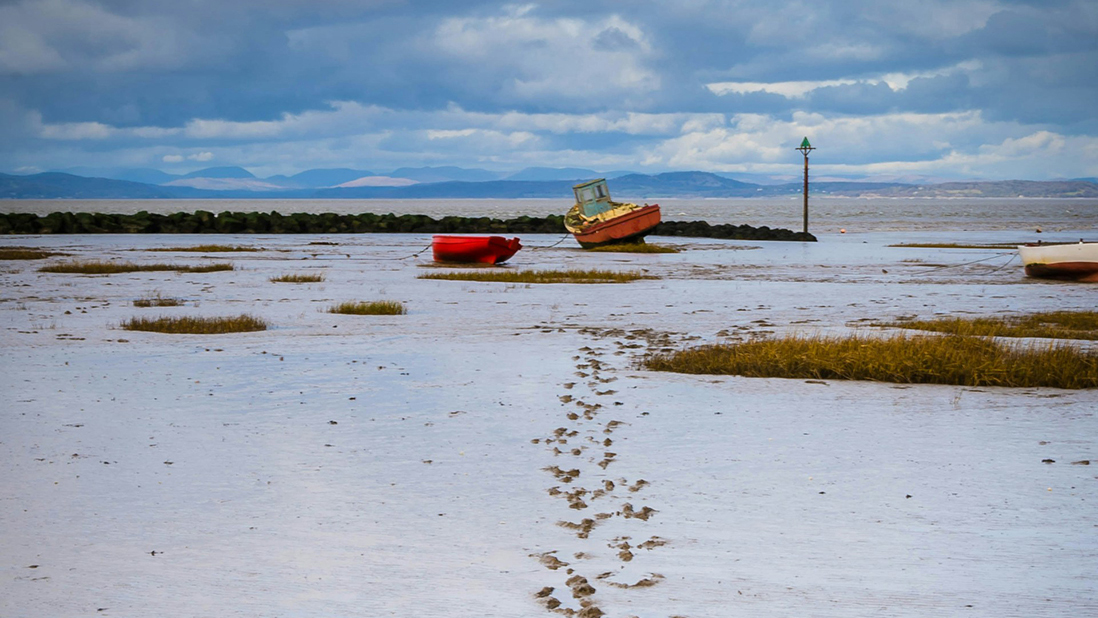
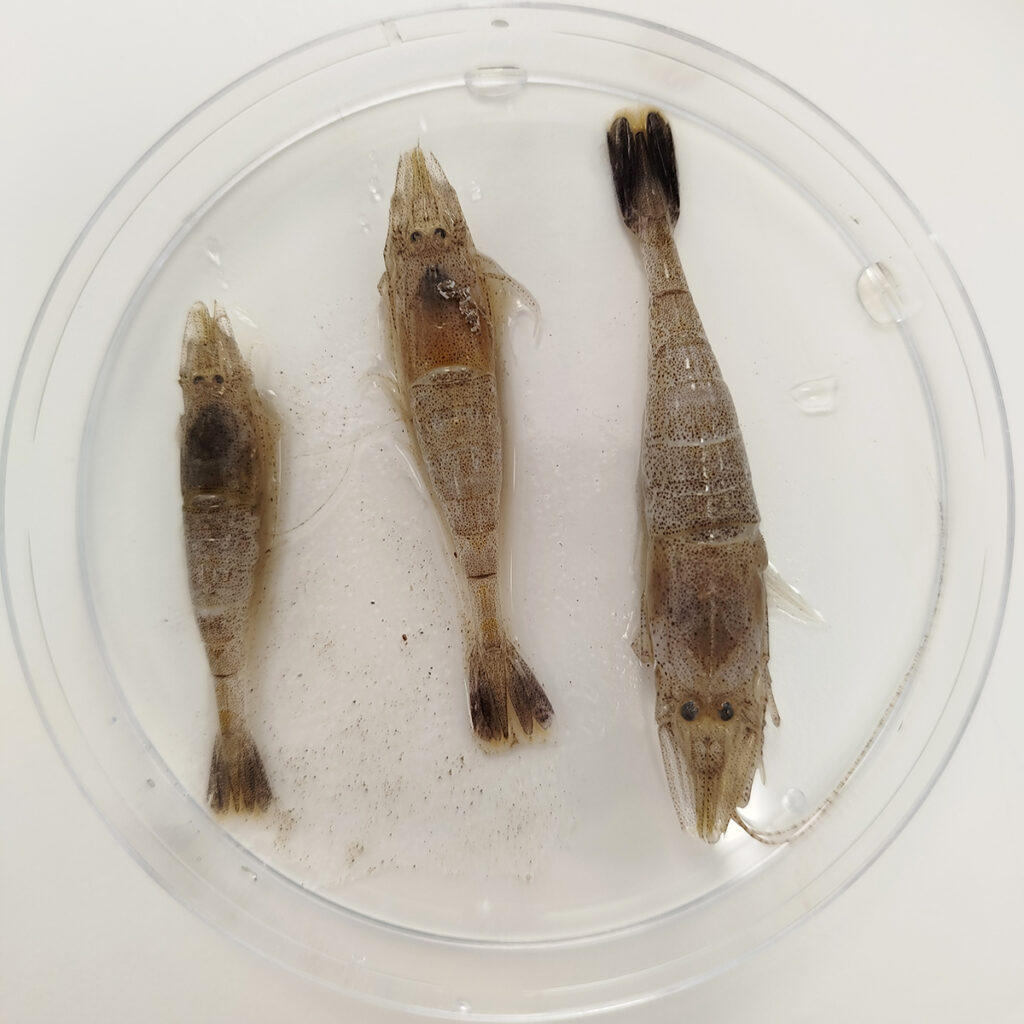
The brown shrimp, Crangon crangon, has been picked from Morecambe Bay’s mudflats for generations. Although this may not have been a big fishery in relation to large offshore fishing, it matters a great deal to the families who still work it and to the identity of this stretch of coast.
For years now, those fishers have been saying the same thing: there are fewer shrimp than there used to be, and the ones they catch are smaller. The landings records also show a steep decline, although landings might not measure shrimp abundance directly. A fishery that once brought in more than 600 tonnes a year now rarely reaches 12. What surprised us when we started looking into it was how little recent science there was to explain any of this. For more than two decades, the people managing the fishery have had little to go on beyond the fishers’ own observations.
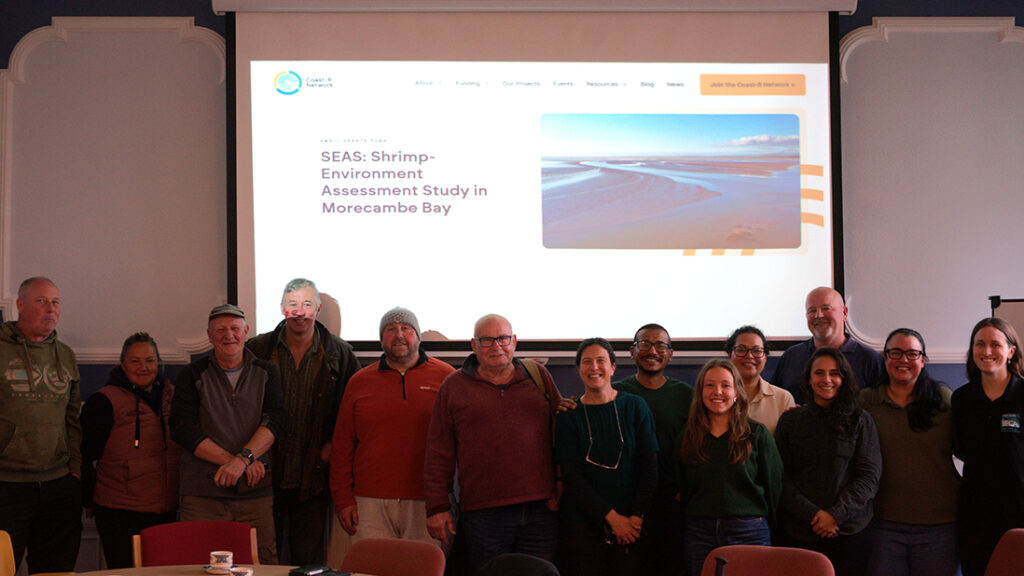
That is the gap that the SEAS project set out to close. It brought together the University of Salford, North Western Inshore Fisheries and Conservation Authority (NWIFCA), Centre for Environment, Fisheries and Aquaculture Science (Cefas), Mersey Gateway Environmental Trust and the fishers themselves, with a fairly practical aim: to put together the first up-to-date picture of what is happening to the bay’s shrimp, and to investigate the explanations fishers have raised.
One theory came up repeatedly at our first workshop. Is the water simply getting too warm? It is not a daft idea. Shrimps are sensitive to temperature. It affects how their eggs develop, when their larvae appear, and even whether they sit up in the water where they can be caught or bury themselves in the mud where they cannot.
So, we began by examining the temperature data. We took 44 years of satellite sea surface temperature data, from 1981 to 2025, and set it against the official landings figures to see whether one could explain the other.
The warming part is not in doubt. Morecambe Bay has warmed by roughly 0.28°C per decade over that period, and the trend is statistically solid. The interesting detail is when the warming happens. It is almost entirely in spring and summer, with no measurable change in winter. Summer temperatures that used to be unusual are now ordinary, and since about 2010 the bay’s summer waters have been consistently warmer than the long-term average.
Whether that warming is what is driving the shrimp down is a harder question, and we must be straight about the results. We looked at whether temperature in one month could predict landings months, or even a year, later. A few possible signals turned up. One hinted that a warm spring is followed by poorer catches around 15 months on, which would fit with heat affecting the young shrimp. But once we accounted for limitations of the short and patchy landings record, those signals became too weak to rely on.
Our honest conclusion is that a warming sea is a plausible part of the story but not a proven one. Other factors may also play a role: changes in fishing effort, shifting sediments, water quality, and real gaps in the historical catch data itself.
Temperature was only one strand of the work. Across three sites, Flookburgh, Heysham and Fleetwood, we also collected seawater, sediment and shrimp to build a baseline the bay has never had before, including heavy metals, and microbes in the water. We will be bringing all this back to the community at a workshop on 26th of October, to talk through what it means and what should happen next. The shrimp have supported this coast for a very long time. Working out why they are struggling, and being honest about what we still cannot say, felt like the right place to start.
Find out more about Dr Jajati Mandal’s “SEAS: Shrimp-Environment Assessment Study in Morecambe Bay” via the project web page.