
ABOUT THE PROJECT
SEAS (Shrimp-Environment Assessment Study) investigates the sharp decline of brown shrimp (Crangon crangon) in Morecambe Bay. The project brings together researchers, fisheries authorities, environmental organisations, and local fishers to understand the environmental pressures affecting this culturally and economically important fishery. By combining ecological monitoring, contaminant analysis, and climate data with local knowledge from fishers, SEAS aims to generate the first integrated baseline of shrimp population health and environmental conditions in the bay. The findings will support evidence-based fisheries management, strengthen collaboration between science and coastal communities, and help protect the long-term sustainability of the region’s artisanal shrimp fishery.
PROJECT LEAD
Dr Jajati Mandal
University of Salford
LOCATION:
Morecambe Bay, UK
Project ACTIVE:
1 February – 31 November 2026
Project Partners










Project Funders

The Challenge
Brown shrimp (Crangon crangon) are a cornerstone of the artisanal fishing heritage of Morecambe Bay and an important component of its coastal ecosystem. However, local fishers have reported a sharp decline in shrimp abundance and size over recent decades. Historical landing records suggest that annual catches once exceeded 600 tonnes but have now fallen to fewer than 12 tonnes.
Despite the importance of this fishery to the regional economy and cultural identity, there has been little scientific investigation of shrimp populations in Morecambe Bay for over twenty years. As a result, fisheries authorities currently rely largely on fishers’ observations and fragmented historical data when making management decisions.
Several potential drivers have been proposed, including rising sea temperatures, declining water quality, and chemical pollution in sediments and coastal waters. Yet robust environmental and ecological data linking these factors to shrimp populations are lacking. Addressing this knowledge gap is essential to understand the causes of decline and to support sustainable fisheries management in the bay.
Our Approach
SEAS will address the decline of brown shrimp in Morecambe Bay through a collaborative research approach that integrates scientific monitoring with the knowledge and experience of the local fishing community.
The project brings together researchers from the University of Salford, fisheries authorities (NWIFCA), environmental scientists from CEFAS, and the Mersey Gateway Environmental Trust, alongside local shrimp fishers. This partnership ensures that research questions, sampling locations, and interpretation of findings reflect both scientific evidence and lived experience from the fishery.
The study will combine ecological monitoring, environmental chemistry, and climate analysis to identify potential drivers of shrimp population decline.
Key elements of the approach include:
- Participatory workshops with fishers to co-identify sampling sites, share historical observations, and guide the research focus.
- Environmental sampling of sediment, water, and shrimp across Morecambe Bay, followed by laboratory analysis of contaminants such as metals and organic pollutants.
- Shrimp population monitoring, including measurements of size, density, sex ratio, and maturity to establish a baseline of population health.
- Climate and habitat analysis using historical and contemporary data to assess changes in sea temperature, salinity, and environmental conditions.
- Integrated data analysis and modelling to explore potential links between environmental stressors and shrimp population trends.
Findings will be shared with fishers, regulators, and local communities through workshops, accessible reports, and policy briefs. The project will produce the first integrated environmental baseline for shrimp populations in Morecambe Bay and provide evidence to support sustainable management of this important coastal fishery.
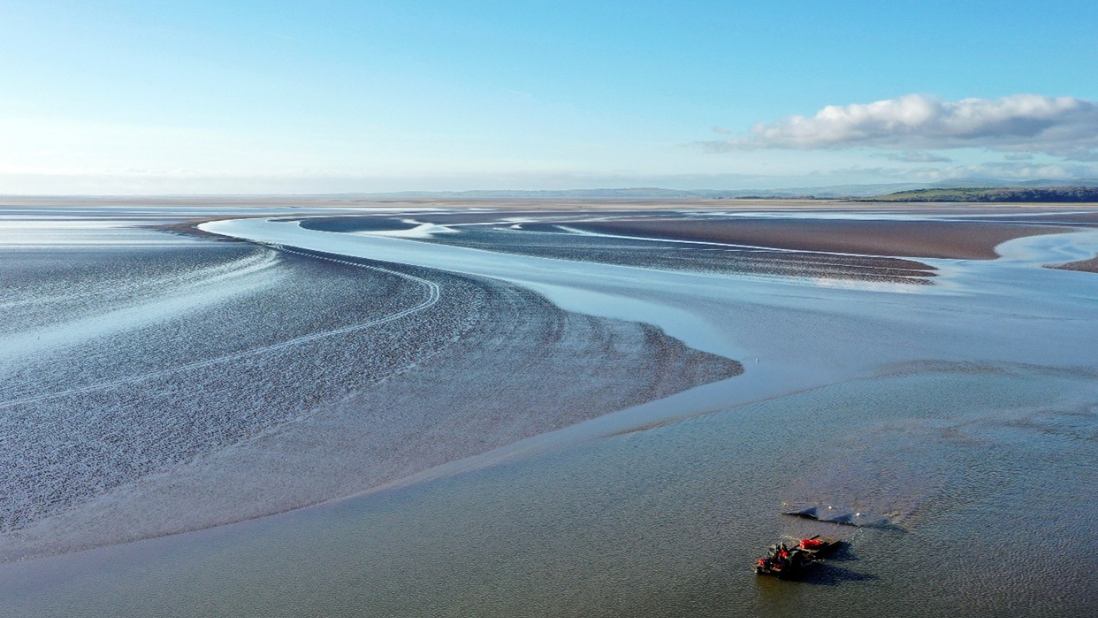
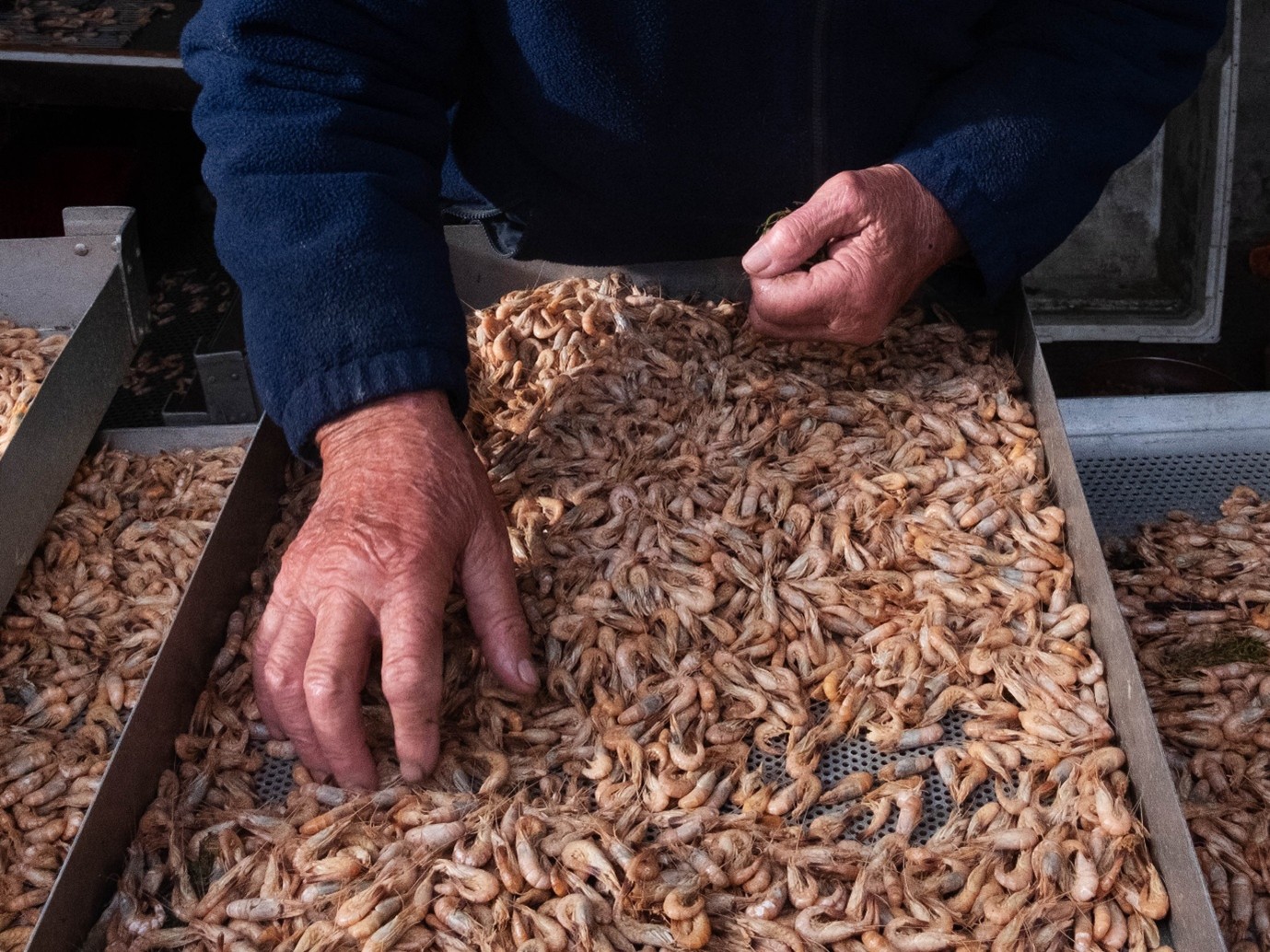
(Image Credit: Tessa Bunney)