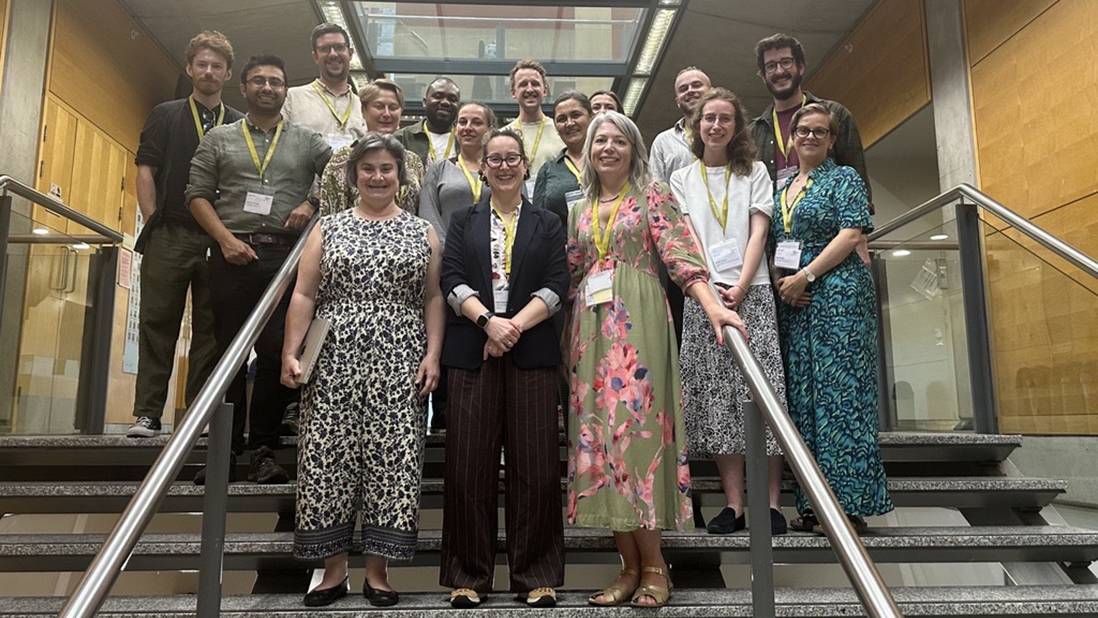
With the Coast-R network reaching its halfway point, we took the opportunity to bring researchers across the ReCCS programme and our Small Grant Fund projects together at this year’s RGS-IBG conference in London. Dr Kate Smith reports on our two sessions, where ten of our projects shared work in progress, from beach monitoring to legacy landfill risk to serious games for coastal planning, highlighting the diversity of approaches to coastal resilience we’ve been able to foster in the past 2.5 years.
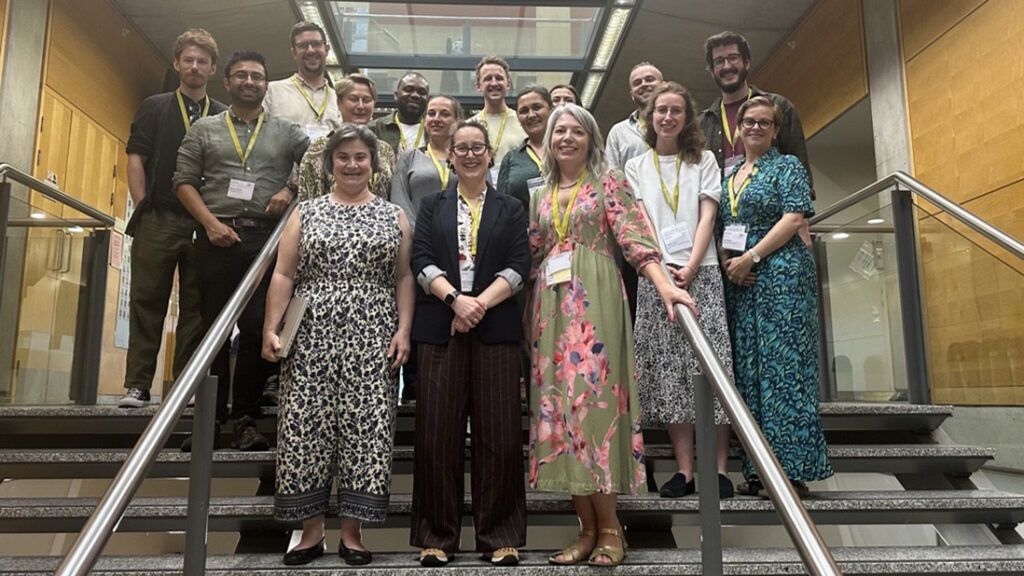
Across two sessions, ten of our Resilient Coastal Communities and Seas (ReCCS) programme and Coast-R Small Grants Fund projects shared work in progress, from beach monitoring to legacy landfill risk to serious games for coastal planning.
Session One: Community Voices and Structural Change
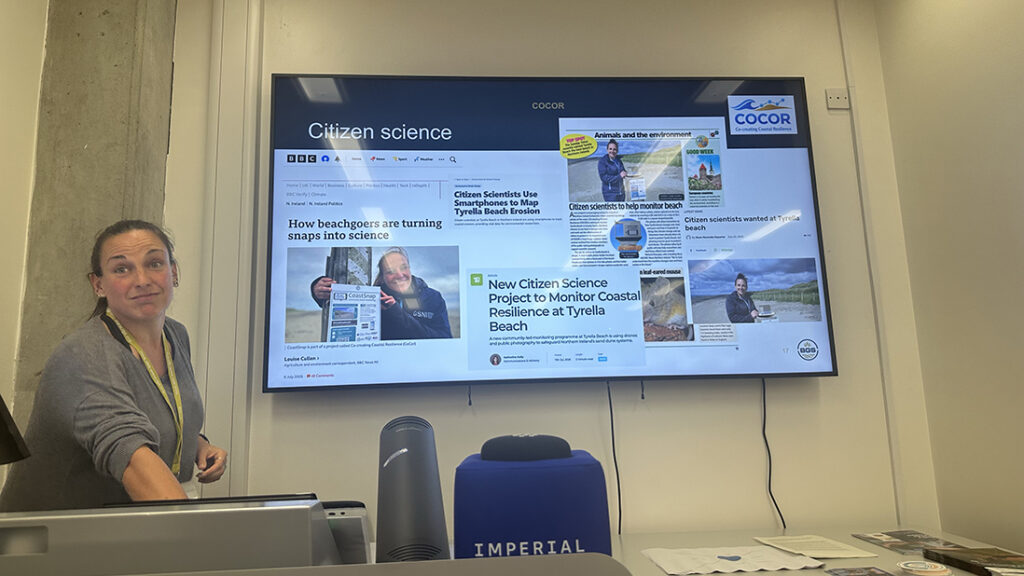
Monique Biasque (COCOR) opened with work on beach and dune stability at Tyrella Beach, Northern Ireland, including CoastSnap monitoring stations that have driven strong public engagement and will continue working after the project’s funding ends.
Scott Leatham (ARISE) shared early findings from community workshops across four English coastal towns, using creative methods like discussion tablecloths to surface “relational resilience,” the social infrastructure that helps communities cope with change.
Claire Harris (Archive to Action) introduced a living digital archive for the Swale estuary, where communities record their coastal and cultural histories. Her key insight: the barrier to better coastal decisions isn’t a lack of technical knowledge, but a lack of trust and dialogue between communities and decision makers.
Dragana Vidovic (ARISE) outlined a model of community resilience built from structural conditions and resources, working through relationships and capacities to shape outcomes, using Thorpeness as a case study.
Malachy Buck examined how planners in England and Northern Ireland navigate uncertainty when managing coastal risk, highlighting tension between restricting development in at-risk areas and the economic pressure to release coastal land, a challenge felt more acutely in Northern Ireland, where shoreline management plans are not universal.
Discussion afterwards touched on the skills gap in coastal planning, how rarely “resilience” is actually used by communities themselves, and the limits of economic growth as a measure of successful outcomes. A closing empathy mapping exercise from Matthew Howell and Tom Avery, developed from work on a shared user pathway in South Wales, showed both the value and the limits of that method for surfacing different user needs.
Session Two: Landfills, Listening and Long-Term Impact
Rebecca Macklin shared a project listening to coastal communities in Yell and Aberdeen, using sound as a research method to capture intergenerational experience of place, including the loss of culturally significant sounds like foghorns.
Rhys Jones and colleagues from RACC turned attention to legacy coastal landfills, linking their work to the CCC’s CCRA4 report on the urgency of this often overlooked risk. Isabel Cotton and James Robinson expanded on RACC’s community engagement, defining three types of community (of place, of practice and other than human) and reflecting on the difficulty of raising awareness of problems that don’t yet have solutions.
Steven Forrest (Shifting Shores) is developing a freely available serious game to help authorities and communities discuss coastal adaptation, working directly with North Yorkshire Council to feed results into local strategy.
Amy McCarron (TRANSECTS) closed the formal presentations with reflections on energy transitions in Orkney, Aberdeen and the Humber, and how coastal communities have long carried the legacy, and the burden, of previous transitions.
Reflections at mid-term
Taking stock of everything shared by our panellists, the day ended with a discussion asking whether community involvement can genuinely shape coastal decisions within a five-year programme. The panel’s answer was cautiously optimistic: we’ve undoubtedly already brought new knowledge and approaches to bear on important topics in coastal resilience. The warmth and energy in the room at RGS reflect consistently high levels of engagement and interest in the work happening across these projects, and we look forward to seeing their impacts in the second half of our network’s funded lifetime.