Dr Matthew Howell of the University of Swansea explores the inclusivity of the shared user pathway across Carmarthenshire, Wales through his Coast-R Small Grant Fund project: ‘Engaging with the Coast: Facilitating Community Dialogue around Usage of and Access to Coastal Shared User Pathways’.
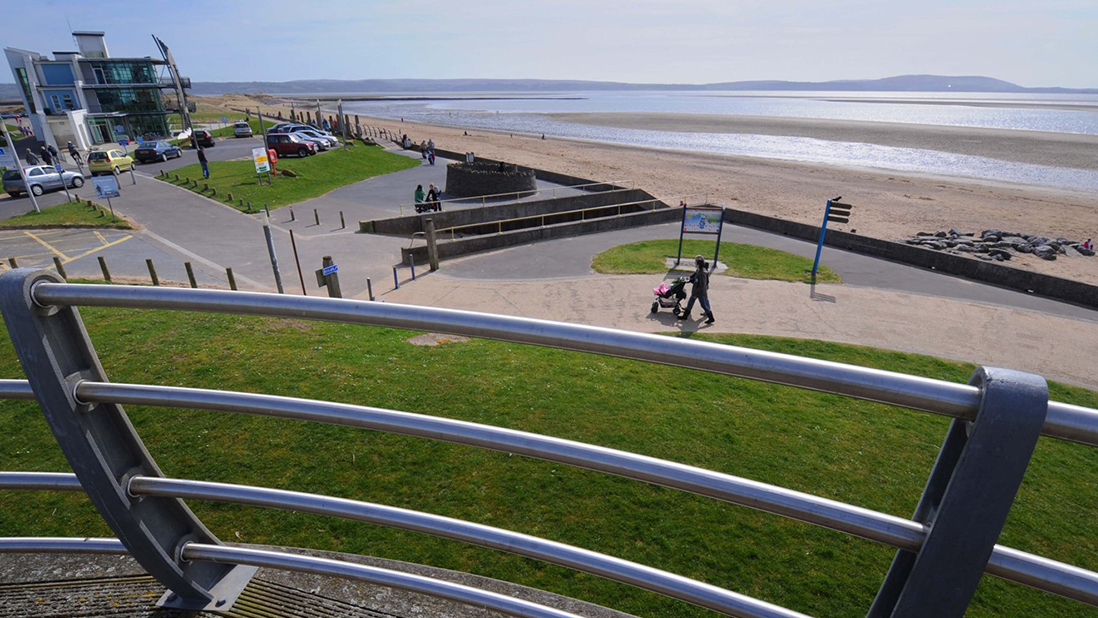
Using Llanelli Millennium Coastal Pathway as a case study, the following blog highlights how misunderstandings of shared space can lead to tensions and sometimes conflict between different users.
This project builds on previous research undertaken in Swansea in 2025, which suggested that uncertainty around pathway etiquette and different expectations of pathways usage can some people feeling vulnerable whilst using shared pathways. Significantly, the research points out that vulnerability is not something individuals inherently possess. Rather, they are made to feel vulnerable by the surroundings they encounter and the way that some environments are used.
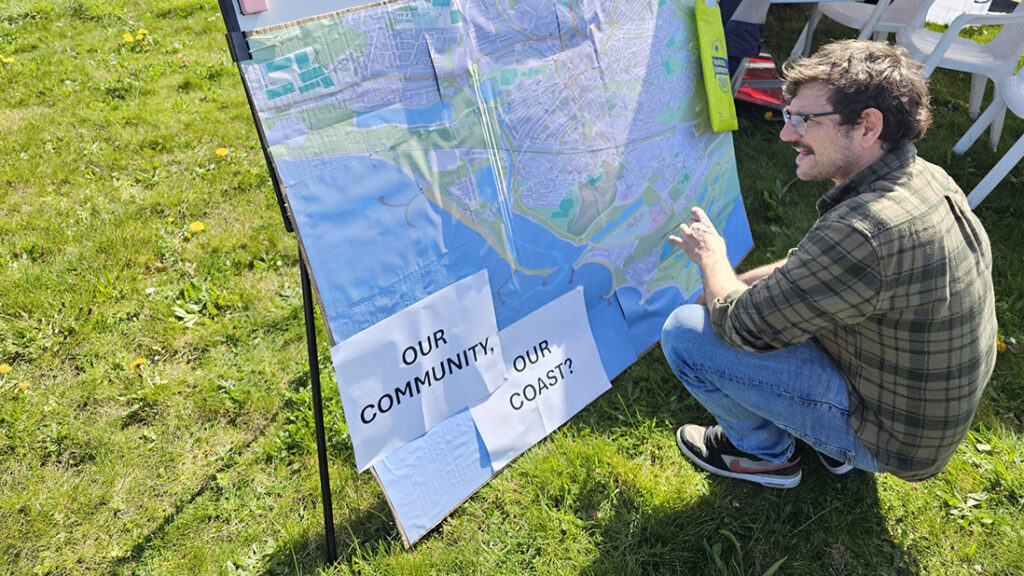
Since April 2026, Dr Tom Avery and I have engaged with a variety of pathway users, community members and organisations, and stakeholders. This was done through ethnographic observations, stakeholder consultations, community engagement activities and a public survey that has involved more than 200 responses across Carmarthenshire. Early survey findings indicate that some of the tensions, and vulnerabilities, experienced on shared user pathways stem from different interpretations of what these spaces actually are.
One stakeholder reflected on this confusion when discussing the pathway’s history:
“The old Millennium Pathway was first introduced. It was called the Millennium Cycle Path. The name was changed soon afterwards and it became a shared user space rather than a cycle path.”
This distinction is important because it highlights how people’s interpretations of the pathway are shaped by assumptions about who the space is primarily designed for, potentially creating a hierarchy of users.
For some users, the pathway is part of National Cycle Route 4, a nationally significant route stretching from London to St Davids, west Wales. Some see the pathway as a Wales Coast path, which is a continuous walking trail across the entire coastline of Wales. For others, it is a local community space used for walking the dog, meeting friends, exercising or simply enjoying the coastline. Many of the local community members are oblivious to what the National Cycle Route 4 is. And many National Cycle Route 4 users are oblivious to what or where Pwll is.
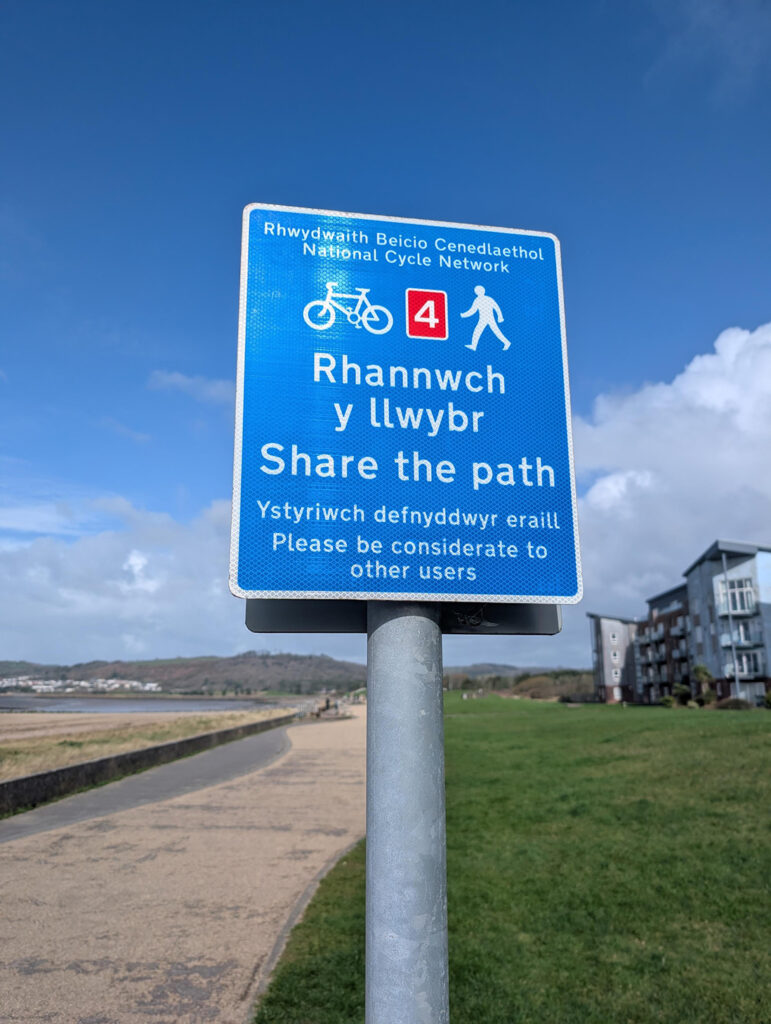
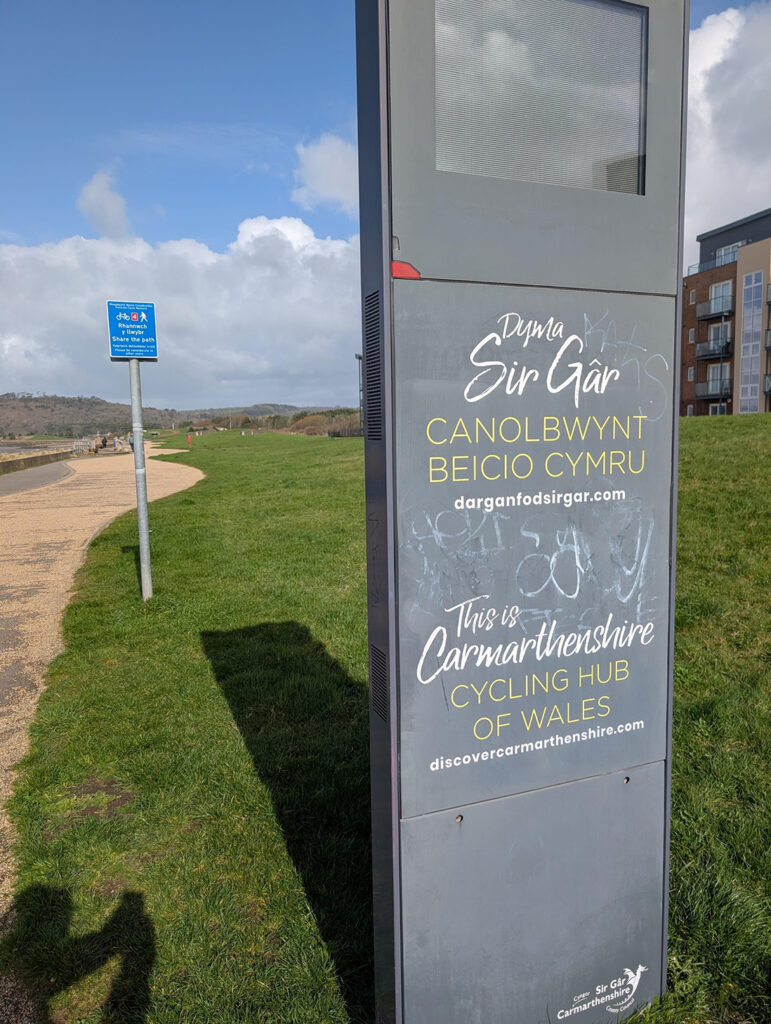
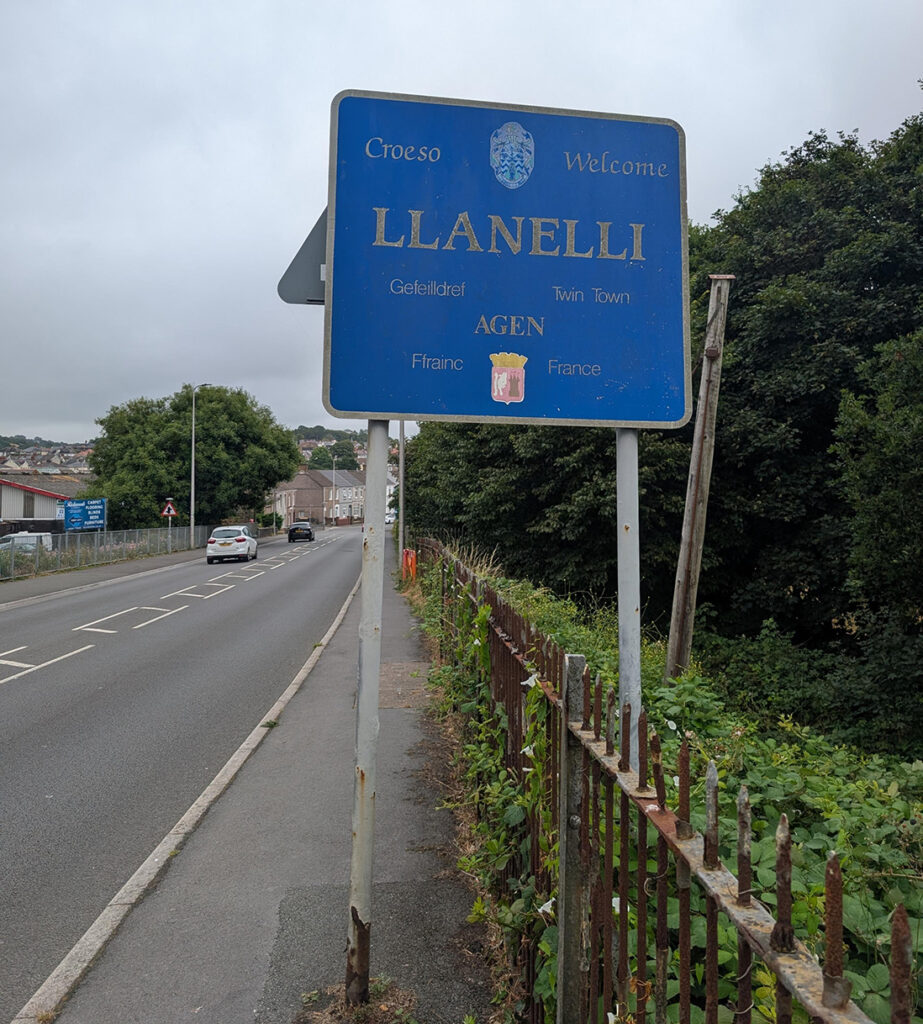
In the absence of clear guidance regarding the purpose of the pathway and how it should be used, some users can interpret the space in different ways. These competing interpretations can result in tensions and occasionally conflict between different user groups. The pathway therefore becomes a liminal space, with multiple and overlapping meanings. It may be understood simultaneously as a local community space, a national transport route and part of a wider international tourist destination. The challenge lies in ensuring that one interpretation does not become dominant over others. Furthermore, these distinctions prevent the formation of hierarchies that might slowly exclude certain groups from the space or make users feel vulnerable or out of place.
One emerging idea from this research is the concept of community pockets. These are sections of the pathway where people know each other, engage in regular interactions, and share a common sense of communal identity in direct relation to the space. Areas around Burry Port, Pwll, and North Dock, for example, appear to function as social community spaces as well as transport routes. People describe seeing familiar faces daily and developing a sense of belonging through regular exchanges.
However, it should be noted these spaces are often also the busiest. Facilities such as benches, bins and toilets attract users and create clusters of activity. Additionally, users feel safer in the company of familiarity. One stakeholder described how some of the routes have become so popular, they have become “victims of their own success”. The increased use of community pockets can result in pinch points where different users compete for the same space, occasionally resulting in near misses leaving some feeling vulnerable.
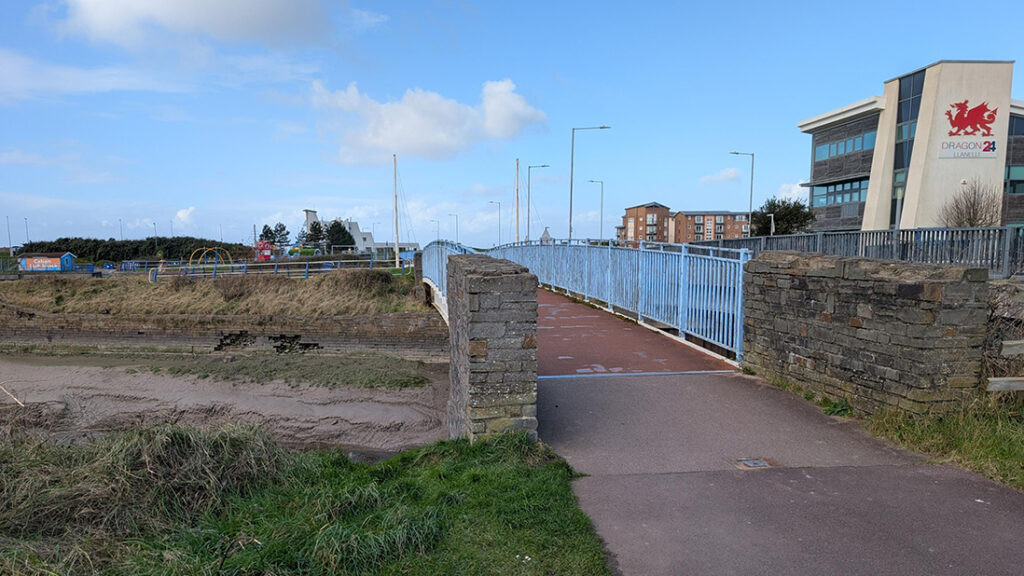
The idea of borrowed space has also become useful in helping us understand some of the tension of community pockets. If sections of these pathways are community assets, visitors do not simply travel through them; arguably they temporarily borrow them. This raises important questions around rights and responsibility, in relation to cooperation and coexistence. As these routes are promoted, we should question how these spaces serve cyclists, runners, walkers, children, older adults, people with impairments and those who are disabled, without privileging one group over another?
Survey findings suggest that clearer guidance may be part of the solution. Around 75% of respondents agreed that guidance on sharing the pathway would improve everyone’s experience, while 80% felt that signage explaining etiquette would be helpful.
The next phase of the project will continue exploring these issues with community members and stakeholders. Ultimately, the goal is not simply to understand how pathways are used, but how they can remain inclusive spaces that minimise feelings of vulnerability for their users.
To find out more about Engaging with the Coast: Facilitating Community Dialogue around Usage of and Access to Coastal Shared User Pathways, visit the project page or email project lead, Matthew Howell via Matthew.howell@swansea.ac.uk