Community Food Researcher Laura Dunn and Research Fellow Dr Louise Hunt from the University of Plymouth talk about their Coast-R Small Grant Fund project: ‘Fish Fingers and Fresh Ideas’.
When people think about innovation, a fish finger probably isn’t the first thing that comes to mind.
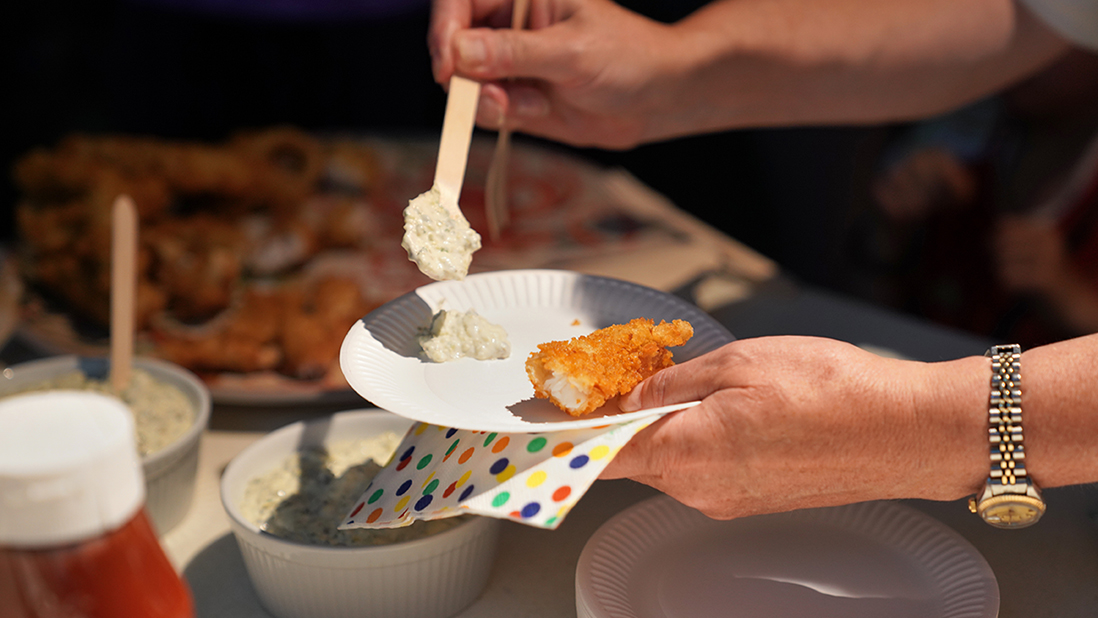
But in Plymouth, the Plymouth Fish Finger has become much more than a new food product. It’s a community-led social innovation that brings together local fishers, residents, schools, researchers and businesses to tackle food inequality while supporting the local fishing industry.
Now we’re taking the next step: sharing what we’ve learned so other coastal communities can create change in ways that work for them.
Why this project?
Coastal communities across the UK face many of the same challenges. Economic change, declining fishing industries and high levels of deprivation can leave communities feeling overlooked, despite their wealth of local knowledge and expertise.
The Plymouth Fish Finger grew from conversations with local people. As part of the UKRI-funded FoodSEqual programme, six local people drawn from an area of Plymouth with high levels of deprivation were trained as Community Food Researchers and became equal members of our research team. Together, we explored local food aspirations and uncovered a strong desire for affordable, locally caught fish, opportunities to try different species, and a better understanding of where local seafood comes from.
Working alongside small-scale fishers, schools, food providers and community partners, these conversations led to the co-design of the Plymouth Fish Finger—a healthy, sustainable product made using underutilised fish species. The project demonstrates how communities can work cooperatively to improve access to healthy food while supporting local fishing livelihoods.
Along the way, we’ve learned valuable lessons about co-production (working in partnership so communities, industry and academics collaborate throughout a project), partnership working and community-led innovation.
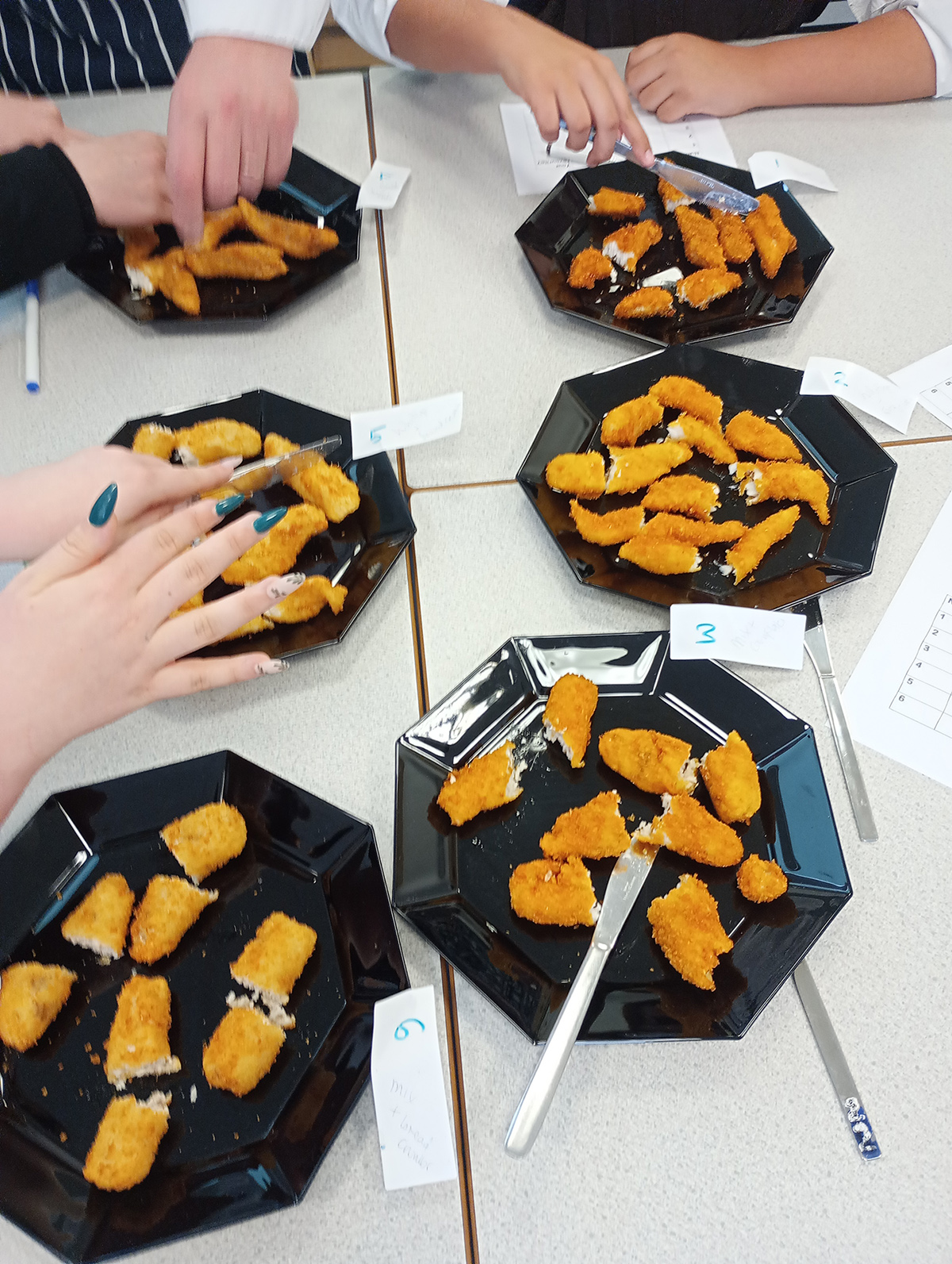
‘Hi, my name is Laura and I am a Community Food Researcher (CFR) working on this Coast-R project. My role within our previous FoodSEqual project focused on the Plymouth Fish Finger, a revitalised English favourite using underutilised fish!
I have been part of this unique product going from just an idea to a real product. I have loved every second of the project and am optimistic for its future and hope we can get the desired outcome in getting more of our fish fingers into schools’.
Turning learning into action
We’ve already shared the Plymouth Fish Finger through research papers, policy engagement and public events. But we’ve identified an important gap.
How do we share the process behind the project in a way that’s practical, engaging and useful for other communities?
Thanks to Coast-R funding, we’re co-creating (and sense checking) a Good Practice Blueprint—an accessible, visual guide that captures not just what we achieved, but how we achieved it.
Rather than producing another written report, we’re working alongside a creative associate and project partners to develop a resource that is creative, practical and easy to adapt. Using visual storytelling and interactive methods, the blueprint will help other communities explore approaches they can tailor to their own local context.
Co-producing the blueprint
The project is being delivered in four stages.
- In spring 2026 we began by bringing together everything we’ve learned from the Plymouth Fish Finger project so far and mapping the wider impacts it has already created.
- We ran a creative workshop with key partners to identify the most important lessons and explore how best to communicate them.
- Together with creative associate, Hannah Mumby, we have co-designed the Good Practice Blueprint, using accessible visual methods to bring our collective learning to life.
- Now, we are taking the blueprint to three other coastal communities to test how useful it is in different settings, gather feedback, and encourage shared learning.
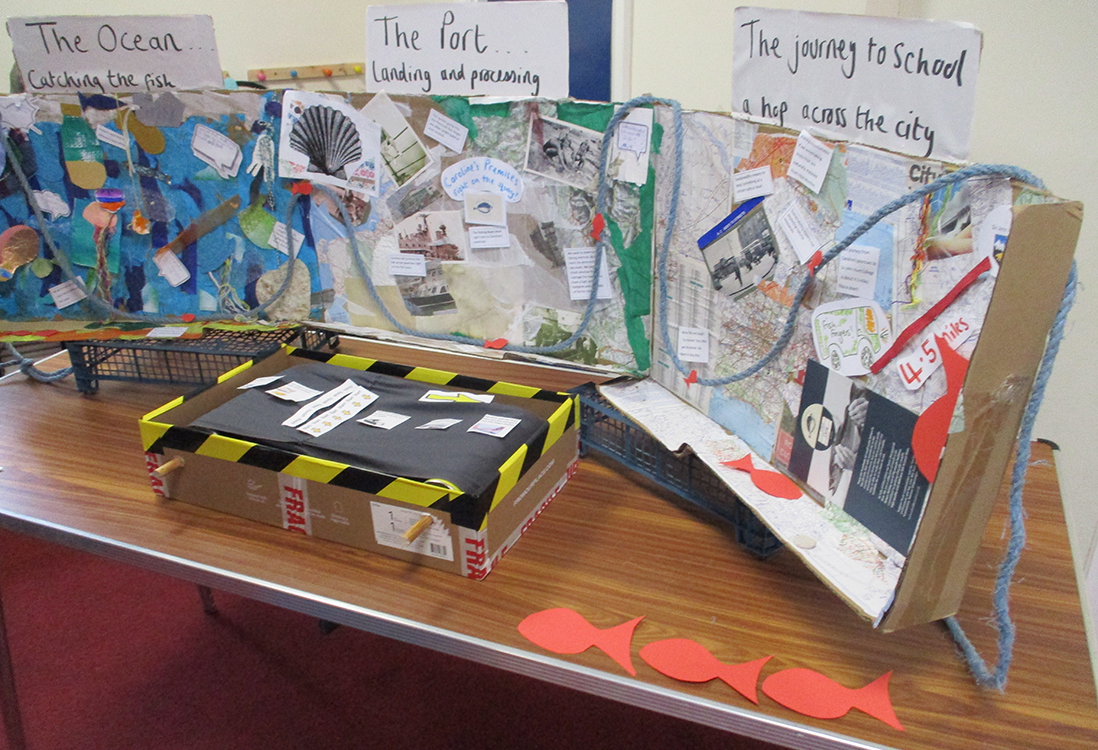
‘Over the past few months, I’ve been taking part in the Coast-R ‘Fish Fingers and Fresh Ideas’ project. I’ve learned a lot and am hoping to see success within the communities who have ‘tested’ our new resource and would love to continue being a part of these projects and see them succeed’ (Laura Dunn, CFR).
Building confidence as well as capacity
This project is about much more than producing a resource.
Involving Community Food Researchers throughout has provided a valuable chance to develop skills and confidence in public engagement and knowledge sharing.
We also hope the project will contribute to wider conversations about inclusive research, creative knowledge exchange and community-led approaches to tackling inequalities.
‘The work that is being put into these social innovation projects has been amazing and it could not be accomplished without the whole Plymouth team and the people behind the scenes. I would like to say a big thank you for the support that all the amazing people and groups have shown and would love to see this work continue in the future’ (Laura Dunn, CFR).
Looking ahead
Every coastal community has its own history, challenges and opportunities. There is no one-size-fits-all solution.
What can be shared, however, are the approaches that helped make the Plymouth Fish Finger pilot successful: listening to local people, valuing lived experience, building trusted partnerships and designing solutions together.
Our Good Practice Blueprint will go live in autumn 2026. It won’t tell communities what to do, instead, it will provide practical ideas, inspiration and tools that they can adapt for themselves. It might also lead to future collaborations.
We’re excited to work with our partners to see where that learning leads next.
To find out more about Fishfingers and Fresh Ideas, visit the project page or email Research Fellow, Louise Hunt via louise.hunt@plymouth.ac.uk