27 June 2026
Dr Ed Brookes is a knowledge translation fellow in coastal communities at the University of Hull, working to support both the Coast-R Network and Hull’s Risky Cities project. Here he gives his reflections on attending Flood and Coast 2026.
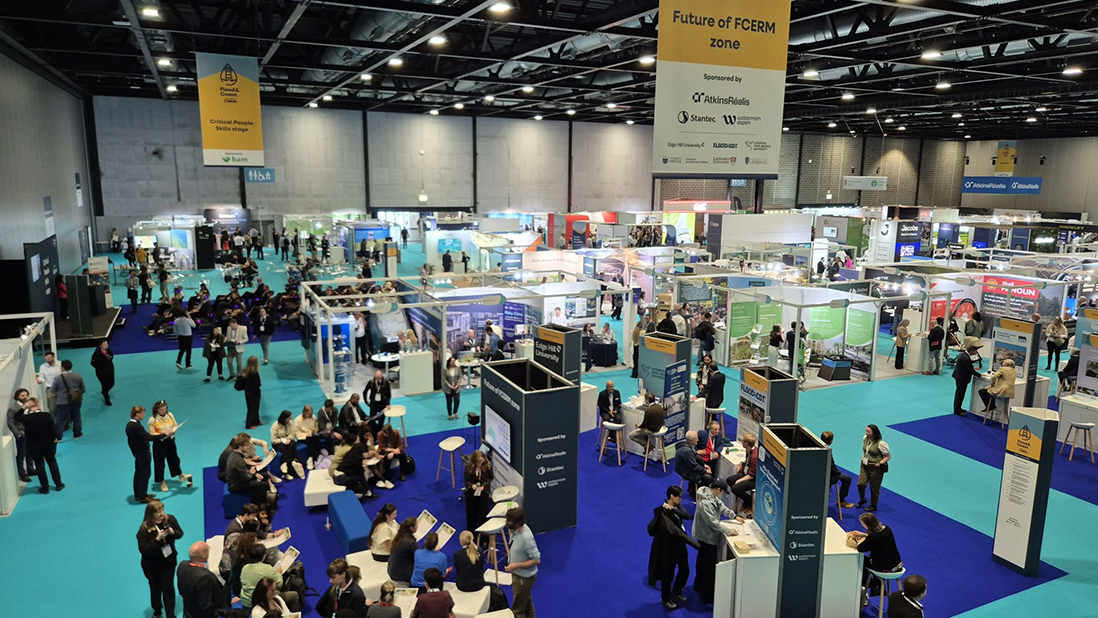
Last month I joined colleagues from across the University of Hull’s Energy and Environment Institute (EEI) at Flood & Coast 2026, held at the Exhibition Centre in Liverpool from 9 to 11 June. Flood & Coast is the UK’s leading annual gathering for the flood and coastal erosion risk management (FCERM) community, and this year’s theme, ‘Policy to practice: achieving resilience together’, felt particularly well suited to the kind of work we do through the Coast-R Network and at Hull, where research is so often shaped with, and delivered alongside, the communities and practitioners it seeks to support.
Conversations at the stand
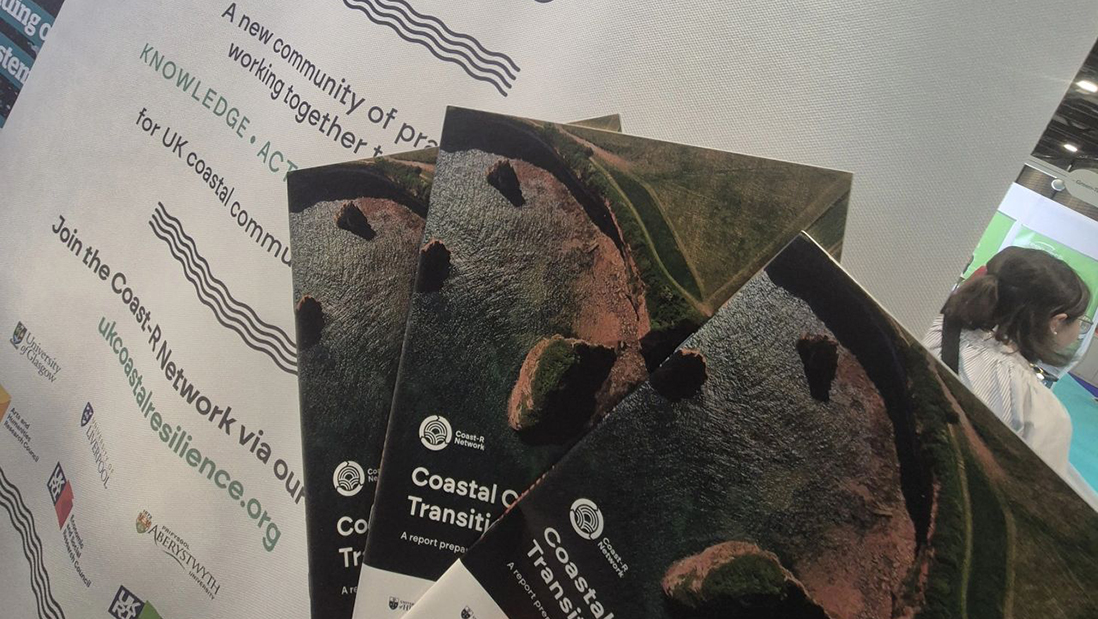
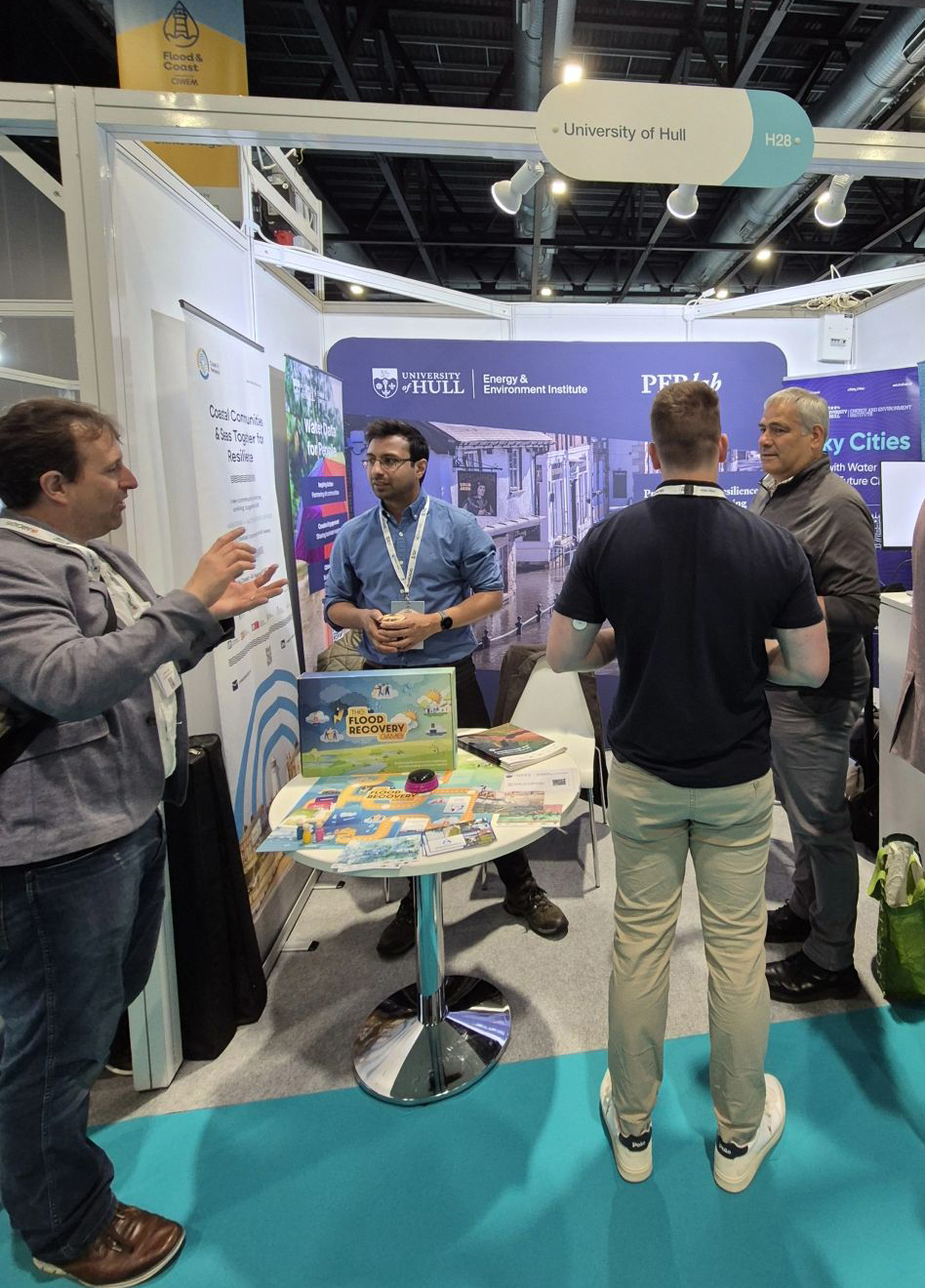
The University of Hull and University of Liverpool had neighbouring stands in the Flood and Coast exhibition hall, with Coast-R Network colleagues based at both. The stands provided a focal point for wide-ranging conversations and connections around coastal issues.
At the University of Hull stand, the breadth of the University’s work came into focus. Visitors asked about the Property Flood Resilience Laboratory (PFRlab), an independent testing facility at The Deep developed with the Environment Agency and Flood Re, which helps industry bring safe and effective flood protection products to market.
Others were drawn to the University’s work on serious gaming, including the Flood Recovery Game, which brings people together to identify and address gaps in post-flood recovery. There was strong interest too in the CIWEM-accredited MSc in Flood Risk Management, which spans modelling, hydrology, policy, social sciences and the humanities, and in Changing Coasts East Riding, which is supporting communities on one of Europe’s fastest eroding coastlines.
Closest to my own research, we were also launching the recently published Risky Cities Toolkit from the Risky Cities project, which brings together the creative and participatory approaches used throughout the project and shares our best practice for working with communities impacted by flooding or coastal erosion.
Running through many of these conversations were questions familiar to the Coast-R Network, and the conference mapped closely onto the Network’s themes. Working Together for Resilience was, arguably, what the whole event was about: the most productive conversations were those that crossed sectoral and disciplinary boundaries, precisely the kind of interface working Coast-R supports through its UK-wide community of practice.
Who wants a rain garden anyway?
One of my personal conference highlights was taking part in the workshop, ‘Who wants a rain garden anyway?’, led by Hannah Worthen and delivered as part of the Water Data for People programme, which I had previously supported as a post-doc before joining Coast-R. Rain gardens and other sustainable drainage systems (SuDS) are increasingly promoted as part of the answer to surface water flooding, but the question of who actually wants them, who looks after them, and whose priorities they reflect is not always well discussed.
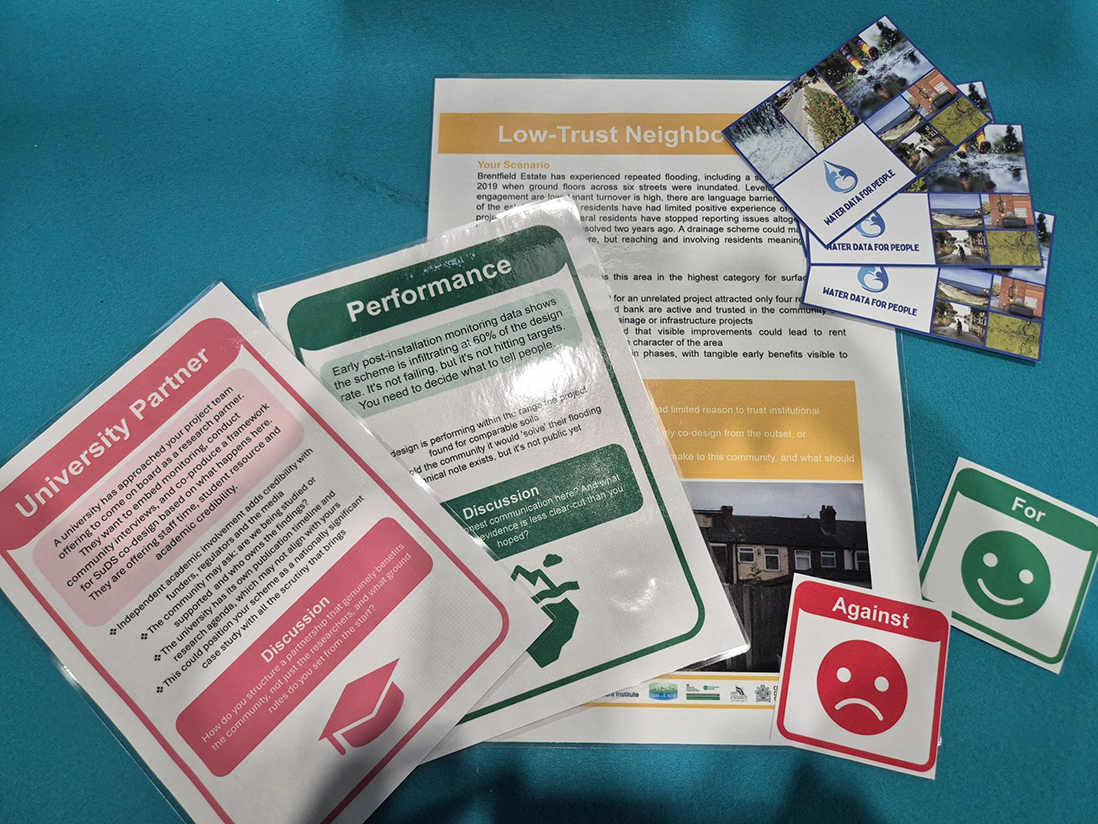
The workshop invited delegates to think through these questions with us via a role play exercise, working through a hypothetical scenario about installing SuDS in their local area. What struck me was how quickly the conversation moved beyond the technical side of SuDS delivery and into the social, and sometimes quite personal, ways people engage with drainage. Participants from local authorities, water companies, consultancies and community organisations were soon discussing maintenance responsibilities, competing uses of green space, the everyday relationships that determine whether a SuDS feature is valued or resented and, of course, the dreaded question of funding. It was a useful reminder that surface water management is as much a social and cultural challenge as an engineering one, and that data about how these systems perform needs to sit alongside an understanding of how people live with them. These are exactly the questions Water Data for People is designed to explore, building on the monitoring and community engagement work of the EEI’s SuDSlab.
Depth and breadth, together
What stays with me from the three days is not any single conversation but the way different parts of the flood and coastal community were able to connect, with engineers, flood risk managers, scientists, artists, management consultants and community engagement professionals working through shared challenges in the same room. The theme of this year’s conference asked how we move from policy to practice, together. My sense, leaving Liverpool, is that the answer lies in exactly these kinds of connections: between disciplines, between researchers and practitioners, and between institutions and the communities they serve. It is a challenge the EEI, and the Coast-R Network more widely, are well placed to help meet.