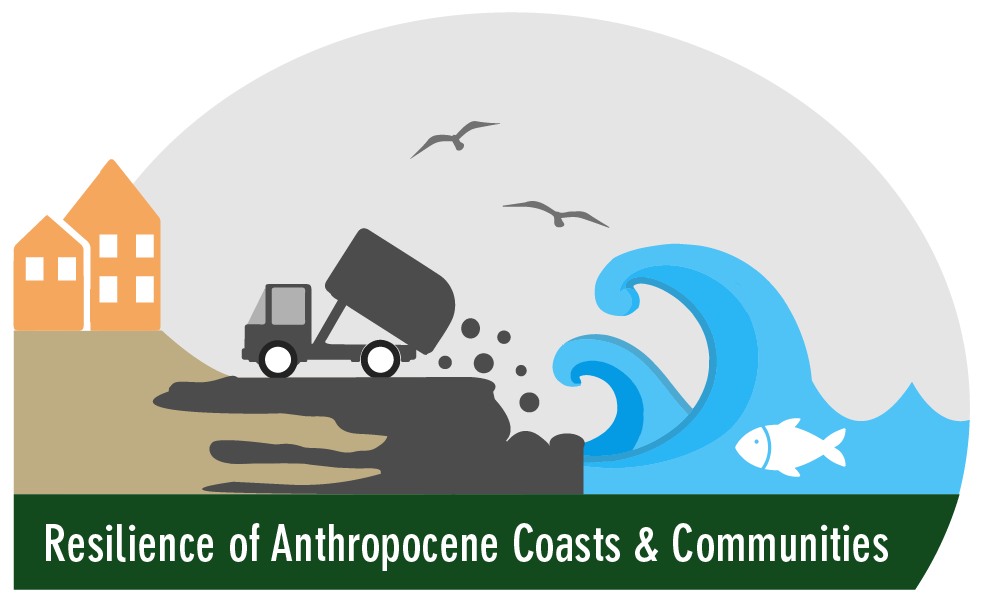
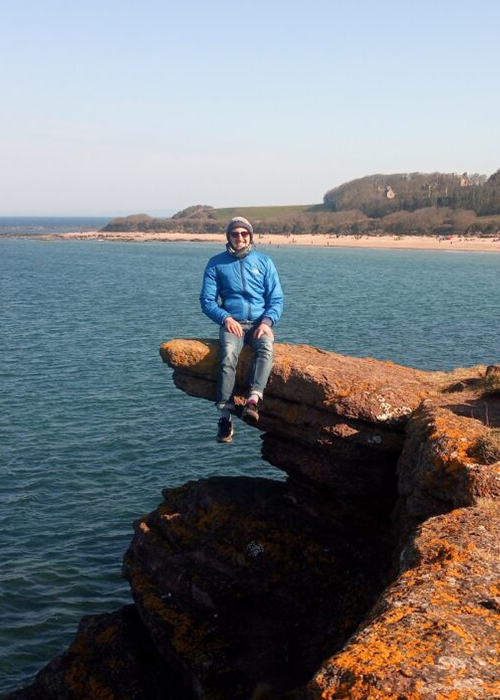
Dr James Robinson is an Environmental Social Scientist and Postdoctoral Research Associate at Queen Mary University of London. James works on the Resilience of Anthropocene Coasts and Communities (RACC) project, exploring how coastal legacy waste is governed in Scotland and England.
Tell us about your role within RACC
Much of the research on coastal legacy waste has concentrated on assessing hazards posed by sites to people and the environment and modelling how climate change and coastal change may increase their severity.
The RACC project is continuing this important work, but the team I’m part of are focused on the social and political dimensions of coastal legacy landfills, which have had far less attention. We’re particularly interested in how these sites are governed, the challenges local authorities face in managing them, and how local communities understand and interact with these places.
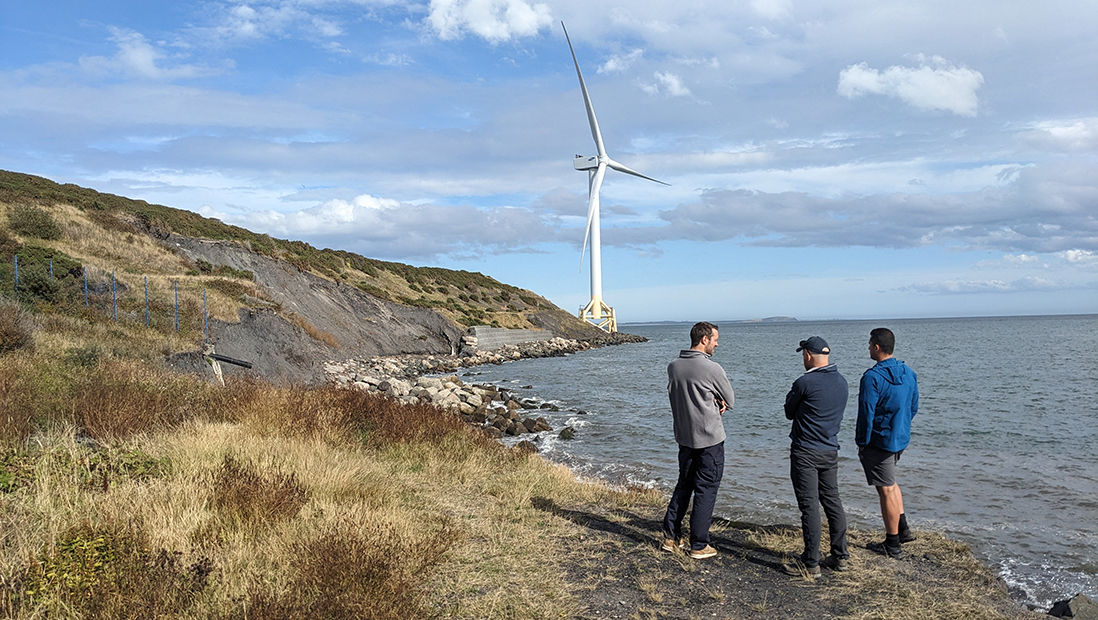
To explore these questions, I’ve been interviewing local authority officers and other stakeholders involved in managing coastal legacy waste across our Scottish case study sites. Over the coming months, I’ll also be speaking with regional and national organisations to better understand how governance operates at different scales.
Tell us a bit about your background
I joined the RACC project and the Coast-R network in September 2025. I’m relatively new to coastal research despite studying or working in roles related to environmental social science for several years.
I recently completed my PhD at the University of Edinburgh, where I explored the politics and discourses surrounding livestock encroachment into community-managed forest reserves in south-east Tanzania. Towards the end of my PhD, I took a break to complete a Policy Fellowship with the Scottish Government and the British Ecological Society. Through that fellowship, I interviewed arable farmers across Scotland to better understand the support they need to adopt and sustain regenerative farming practices. Before that I worked as a Social Scientist at Forest Research on policy-relevant topics related to tree health and resilience. These roles concerned dramatically different landscapes and livelihoods, but all involved working with land users and policy professionals.
Creative approaches
I’m also interested in using creative approaches to encourage participation and stimulate conversations around complex environmental issues.
During my PhD, I collaborated with a filmmaker to produce a documentary that we screened with participants to stimulate discussion around the causes and consequences of livestock encroachment. It’s great to continue this involvement with creative approaches as part of RACC. So far, I’ve worked closely with my colleague and curator Suzy O’Hara to help organise and deliver the Waste Futures Labs in Kirkcaldy, Fife. The programme brought together artists, researchers, residents and even microscopic ecosystems through a series of public events exploring coastal waste legacies and imagining ways to live alongside them.
I’m excited to continue exploring how creative and participatory methods can complement more traditional social science approaches and help bring different voices into academia, policy and practice around coastal futures.
How have you benefited from being part of Coast-R?
Joining the Coast-R Network has been valuable, particularly as someone new to coastal research.
Attending the 2025 Annual Forum in Glasgow during my second week on the job was a fantastic introduction to the breadth of work happening across the network. I was inspired by the range of topics being explored and the creative, participatory methods researchers are using in their work with coastal communities. It was also a great opportunity to meet people working on closely related topics, and I’m still in touch with a couple of researchers I met there.
The network has also helped the RACC project establish a community of practice around coastal legacy waste. Through Coast-R, we connected with the ARISE project team, who generously shared their experiences of developing their own community of practice. Their advice helped shape our approach, which began this month (July 2026) with a new webinar series.
I’m looking forward to sharing our findings through future Coast-R events and continuing to learn from people working across disciplines and sectors towards more just coastal futures.