Dr Amy McCarron is a Research Fellow with the project “TRANSitions In Energy For Coastal Communities Over Time And Space” (TRANSECTS), one of the four projects funded by the ReCCS programme. She is based at the University of Aberdeen.

Tell us about yourself and your project
I’m a Research Fellow at the University of Aberdeen, working on just and equitable marine energy transitions as part of the TRANSECTS project. My role is to understand how coastal communities have experienced major changes in marine industries and energy systems over time, and what those experiences can teach us about the transition now under way.
The project focuses on three case-study areas – Orkney, North East Scotland and the Humber Estuary – and looks across historical whaling and fisheries, offshore oil and gas, and contemporary marine renewables. I am particularly interested in questions around who benefits from change, who gets to influence decisions, and how local priorities, knowledge and identities are reflected in the way transitions are planned.
What will you be doing as part of the TRANSECTS project?
A big part of my job so far has been to learn from past marine energy transitions to understand how ideas about what is fair, or “just”, have changed over time. What might have been considered acceptable during nineteenth-century whaling clearly does not map neatly onto today’s understanding of a ‘just transition’ (the term itself didn’t even exist then!). The challenge has been to interpret past experiences carefully, using today’s understanding of fairness while recognising their historical context, and then ask what they can tell us about how marine energy transitions should be shaped moving forward.
This work fed directly into our recently published Rapid Evidence Assessment, which was a major piece of work. We identified more than 5,200 potentially relevant sources, spanning the early nineteenth century to the present day, and extracted evidence from 181 of them across the three case-study areas. You can read the report here. One of its clearest findings was that some challenges are common and enduring across both places and periods: decisions are often made across disconnected organisations and levels of government; the economic value generated locally can flow elsewhere; and communities can struggle to be heard or have their knowledge and priorities treated as central. Our next step is to review current policy and legislation to see whether it helps address these patterns, overlooks them, or may inadvertently reinforce them. We will then work with a range of stakeholders to think about practical ways forward.
What did you do before joining the TRANSECTS project?
Before joining TRANSECTS, I worked mainly on air quality, environmental health and behaviour change, so this project has been a completely different challenge for me. Much of my previous work involved engaging directly with individuals and communities to understand how people experience environmental risks in their everyday lives, how they interpret evidence and information, and what shapes their ability to act.
With TRANSECTS, I wanted to bring that environmental social science perspective into a new space. Where before I focused on working with individuals to support change, I am now looking more at the larger-scale decision-making and governance that shape marine energy transitions. There are still clear connections between the two: questions about how evidence is used, whose perspectives are included, and how environmental change is experienced remain central, just at a different scale.
What excites you about the TRANSECTS project?
Marine energy transitions are an extremely important, timely and fast-moving area to work in – although it can be difficult to keep up with the pace of change at times! There is a real opportunity for this research to have impact by helping ensure that the shift towards lower-carbon energy does not repeat some of the problems created by earlier transitions.
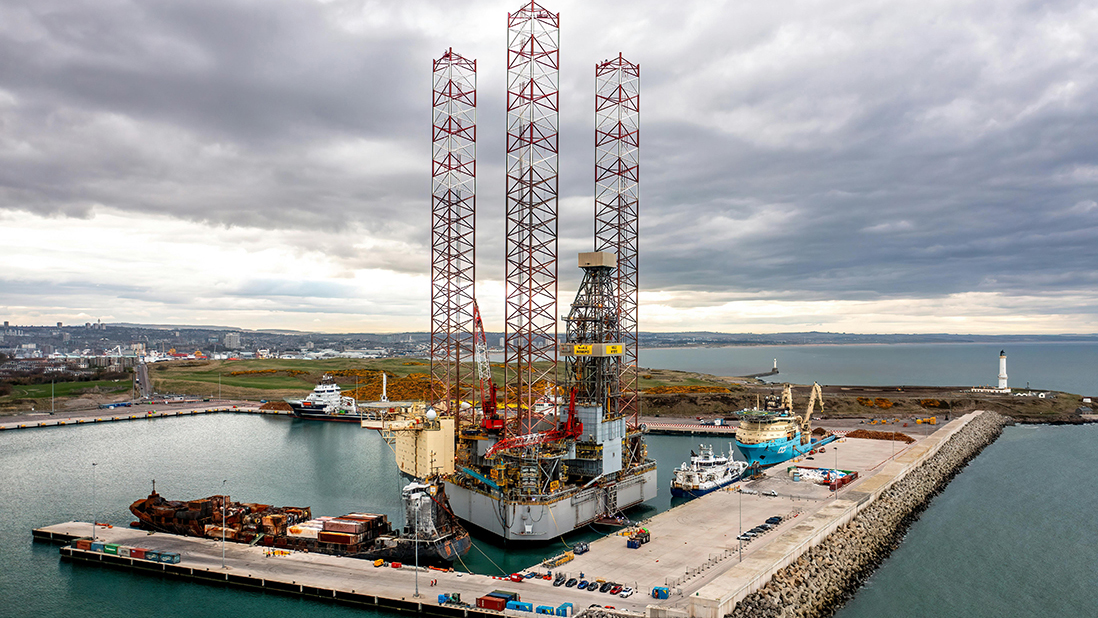
Being based in Aberdeen, a city so closely tied to the North Sea oil and gas industry with the nickname the ‘Oil Capital of Europe’, makes the importance of getting energy transitions right feel very immediate. The future of energy is not an abstract policy issue here – it is connected to people’s jobs, local economies, identities and ideas about what the region’s future should look like.
I find it exciting and rewarding to work on research that can bring historical evidence, current policy and different stakeholder perspectives together to help inform that future.