

In September 2025, the Environment Food and Rural Affairs Committee launched a call for evidence on coastal erosion and landslips as part of its long-term inquiry into Climate and Weather Resilience. Here, Coast-R lead Briony McDonagh summarises the evidence submitted by the Coast-R Network team, ReCCS projects – including ARISE and RACC – and ReCCS partners and aligned projects to the ongoing inquiry.
What’s at stake: a whole-systems picture from ReCCS
The updated National Coastal Erosion Risk Map (NCERM) shows 3,500 properties at risk by 2055 and 10,100 by 2105 if Shoreline Management Plans (SMPs) are implemented. If SMPs are not delivered, up to 32,800 properties could be at risk by 2055. Yorkshire and The Humber faces the largest share of near-term risk (32%), followed by the South West (27%) and East of England (25%) (CRW0063).
Along the 85km East Riding coast, 48km of soft glacial till cliffs are under a ‘no active intervention’ policy; erosion rates reach up to 4.5 m/year, with 13 m/year projected by 2105. Since 2010, 66 properties have been demolished because of imminent erosion risk, and up to 4,759 homes and 1,550 non-residential properties could be lost by 2105 (CRW0039). North Norfolk Council’s analysis suggests up to 1,659 homes and 415 businesses at risk by 2105, 279 ha of agricultural land lost and over 1,300 static caravans affected – critical to local tourism and employment (CRW0032).
Evidence led by the University of Hull and the CoastR Network (CWR0026) sets out five interlinked domains of impact: homes, businesses and economies; health and wellbeing; amenity and heritage; transport and infrastructure; and natural habitats. Crucially, we argue that ‘no active intervention’ is not cost-neutral, a point echoed by colleagues at East Riding of Yorkshire Council / Changing Coasts East Riding (CRW0039) and North Norfolk Council / Coastwise (CRW0032).
The effects of coastal erosion are not limited to the coast – they cascade beyond the cliff edge into inland towns, visitor economies and public services, often hitting least-resourced communities hardest. As the Defra submission (CRW0063) makes clear, current estimates suggest more than 10 km of major roads, 173 km of minor roads, and over 6 km of railways will be at erosion risk by 2105. Examples like the 2014 Dawlish rail closure showed how local failures can create national disruptions.
This whole-systems framing matters. It shifts attention from counting coastal properties at risk to understanding community viability – how loss of roads, utilities, caravan pitches, heritage sites and beach access can tip a coastal place into long-term decline unless transition is proactively planned.

Voices from the coast
In our submission, we included testimony from residents on the Holderness Coast, gathered through creative workshops led by the Coast-R Network. One participant recalled:
‘We had a bungalow further to the coast… There was a road up there, but it’s gone in the sea now and our bungalow has gone.’
Others described losing farmland, amenities and safe beach access, alongside mounting stress and anxiety and a desire for earlier, more transparent dialogue with decision‑makers (CWR0026).
The social and psychological toll of erosion – feelings of abandonment, loss of identity, and fractured communities – should not be ignored. Drawing on experiences in the Coastwise project, Sophie Day’s evidence (CWR0044) describes long-term anxiety, stress, and mental anguish (‘solastalgia’) among residents, as well as the negative impacts on coastal practitioners. As she puts it:
‘Dealing with accelerating erosion on the ground in a reactive way is burning coastal practitioners out and presenting enormous financial difficulties for local authorities’ (CRW0044).
The submission from the Advancing Resilience and Innovation for a Sustainable Environment (ARISE) project (CWR0049), co-ordinated by PI Gina Reinhardt and others, offers complementary insights. The ARISE Community of Practice – working across coastal Norfolk, Suffolk, Essex, and Kent – has documented grief, anger, distrust, and isolation. As colleagues on the ARISE project and Community of Practice also report:
‘Divisions also come between coastal communities, when the actions to prevent erosion in one place affect outcomes and strategies in neighbouring communities. Some coastal residents begin to feel unheard, unseen, and marginalised when they perceive conflict between their own environmentally conscious choices and regulators’ decisions about which sustainability concerns to prioritise.’
More than property: health and hidden hazards
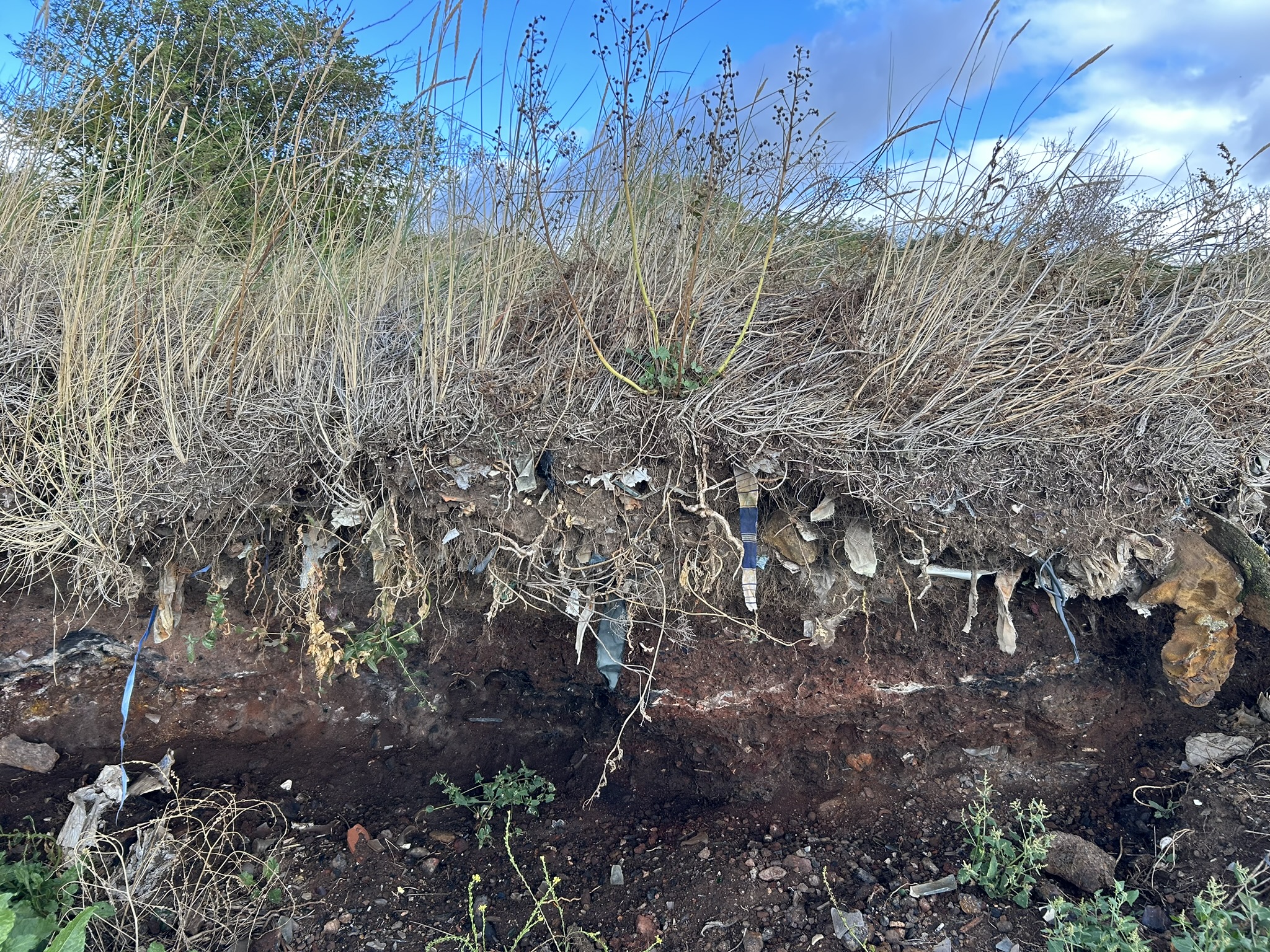
Historic coastal landfills (HCL) are a critical but often overlooked risk at our coasts. HCLs are the focus of the evidence submitted by Kate Spencer of Queen Mary University of London on behalf of the Resilience of Anthropocene Coasts and Communities (RACC) team (CWR0059). Research indicates that England has over 20,000 such sites, many unlined and containing hazardous materials such as asbestos, toxic metals, PCBs, PFAS, and microplastics. One in ten will be at erosion risk by 2050 if not adequately defended, posing serious threats to marine ecosystems and human health. Current policy frameworks, including the Flood and Coastal Erosion Risk Management (FCERM) Strategy, do not account for these risks, forcing unsustainable ‘hold the line’ approaches and limiting adaptation options like managed realignment. Kate and the RACC team call for urgent action: mapping landfill sites using remote sensing, researching the fate of solid wastes in marine environments, and developing economic frameworks to support interventions such as nature-based solutions, in-situ remediation and resource recovery.
Coastal transition in practice
Defra’s Coastal Transition Accelerator Programme (CTAP) is investing £36 million in East Riding, North Norfolk, Cornwall, and Dorset to test proactive adaptation: community transition planning, rollback for homes and holiday parks, ecological enhancement, and pilot programmes for resident support packages and business resilience.
Early results are encouraging. East Riding’s Outline Business Case suggests ~£2.53 of benefit for every £1 invested in coastal transition; Social Value Engine analysis indicates £3–£4 return per £1 for early relocation support. CTAP partners are also building operational ‘knowhow’ e.g. on conveyancing and disclosure of erosion risk, safeguarding graveyards, planning for coast road severance, and improving cross-agency delivery.
Meanwhile, ReCCS projects demonstrate the value of participatory, place-based and creative engagement. In Hull and along Holderness, Coast-R activities (and earlier Risky Cities work) helped residents make risk tangible, shift attitudes, and take practical resilience actions; ARISE shows how repeated positive interactions translate into trust and support for necessary change; and TRACC, who are establishing resilience collectives in the Humber Estuary, mid-north Wales, Firth of Clyde and Lough Foyle to co-design new approaches and positively shift values, goals and paradigms. The experiences of the Resilience Collectives will be shared through a national Resilience Assembly.
A Call to Action
The EFRA inquiry is an important opportunity to ensure those at the frontline of coastal change and transition are heard in Westminster. Evidence from ReCCS and partners converges on a number of key recommendations that we hope will be echoed in the eventual inquiry report:
- Make SMPs statutory and integrate adaptation into sub-policies
- Invest in proactive transition planning and cross-sector coordination
- Recognise the multi-faceted impacts of coastal erosion, including for future ‘host’ communities
- Adequately resource community engagement, including place-based approaches
- And urgently address historic coastal landfills.
Many of these strategic priorities and actions are reiterated in the wider body of evidence submitted to the enquiry. Overall, 65 individuals, groups and organisations submitted written evidence to the inquiry. For a broader perspective on EFRA evidence, see our sister blog post by Andrew Manson.
Find Out More
University of Hull & Coast‑R Network (CWR0026)
North Norfolk District Council (CWR0032)