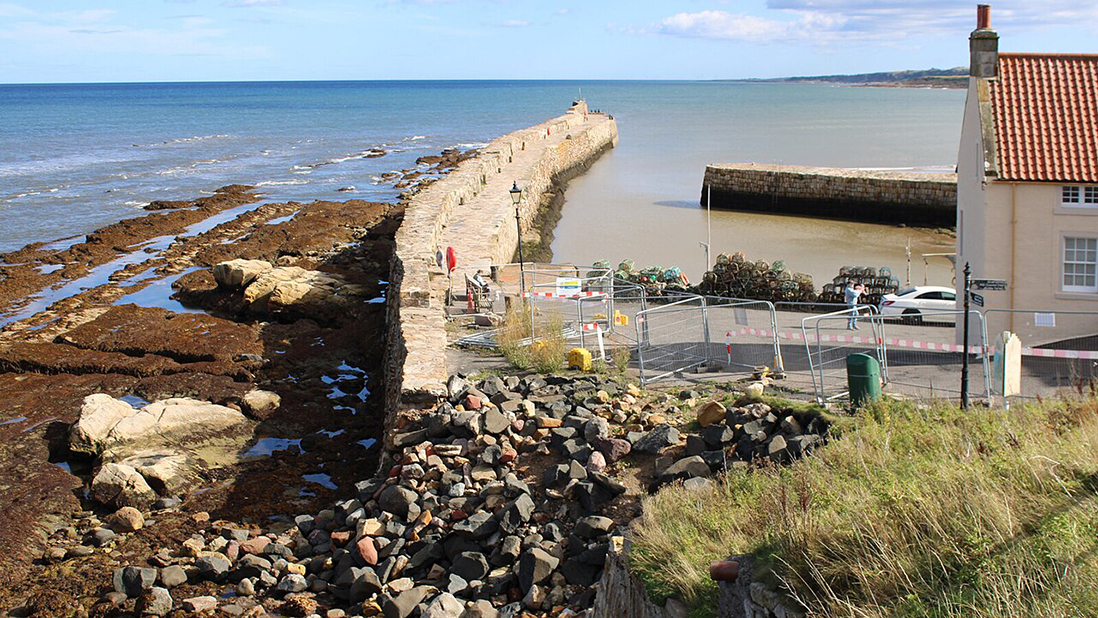
Coast-R co-lead, Professor Larissa Naylor has played a key role in preparing a new Council of Europe report, which details the mounting challenges of climate-change-driven erosion and makes recommendations for action.
Professor Naylor was the sole independent expert on “How can we cope with coastal erosion?”, a report prepared by the Council of Europe’s Congress of Local and Regional Authorities.
The report covers issues from climate change hazards, landscape dynamics, use of nature-based solutions, coastal erosion and land loss, through to multi-level and multi-sector governance, human rights, migration, economics and the use of innovative instruments to adapt to rapidly accelerating rates of coastal erosion.
Professor Naylor said: “This report highlights the urgent need for new approaches to coastal erosion and management as sea levels continue to rise and extreme weather events become more frequent due to climate change. Set against growing evidence that sea level rise is accelerating and will continue to increase, it warns of long-term transformation of coastal landscapes, unavoidable land loss, and impacts on human rights, including the rights to life, private life and property.”
The report also details that across the European Union and the United Kingdom, economic losses due to flooding and coastal erosion enhanced flooding exceeded €1 billion per year and could escalate to €800 billion annually by the end of the century if effective action is not taken.
The recommendations were unanimously adopted during the Council’s 51st session in Strasbourg on Tuesday 27 October. They will now be shared with UK regional and local government authorities as well as across the 46 member nations of the Council of Europe.
Link to the official Council of Europe summary of the debate.
Watch the Council of Europe short film about the report