Dr Ed Brookes is a Knowledge Translation Fellow (Coastal Communities) at the University of Hull. With a background in cultural geography, Ed supports coastal resilience and climate adaptation work — including the UKRI-funded Risky Cities project and the Coast-R Network— helping translate research into practical insights for communities,
practitioners and policy.
Tell us about yourself and your current role
For the last four years, I’ve had the privilege of working across a range of projects at the University of Hull, collaborating with residents across the Humber region to address flooding and coastal challenges through creative and participatory approaches.
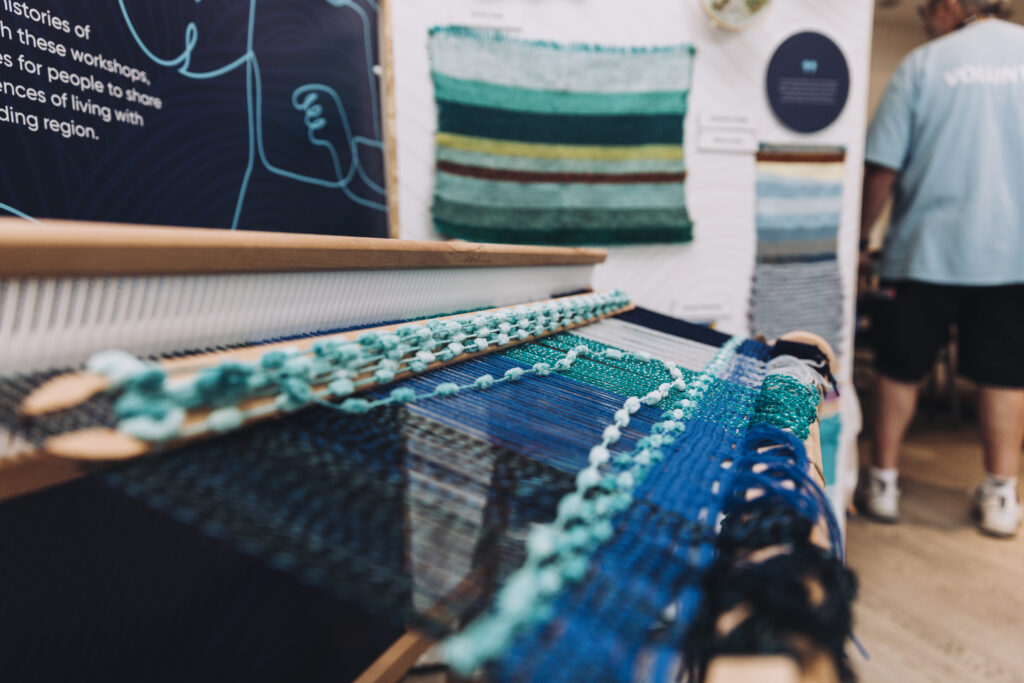
That has included making and designing watery murals as part of the Water Data for People project; weaving, writing and zine-making through the AHRC-funded Risky Cities project; and working with arts charity Back to Ours as part of an ESRC-funded early career fellowship focused on arts, heritage and liveability.
In my current role across Risky Cities and the Coast-R Network+, I’m drawing on what I’ve learned from these projects to connect with — and learn from — the wide variety of activities and opportunities happening across the network. Over the next few years, I hope to help share knowledge between communities, practitioners, policymakers and academics, making it easier to collaborate on some of the biggest challenges facing the coast.
What kinds of approaches do you bring to coastal resilience work?
I’m especially interested in creative, participatory and arts-based approaches — and in what the environmental humanities can offer coastal and flood resilience.
In my experience, people often enjoy activities that let them explore complex issues creatively, especially when that creativity connects to the places, memories and local histories that matter to them. Done well, this can be a powerful way to bring people from many different backgrounds, experiences and abilities into conversations about coastal change — and into decision-making about resilience.
I’m currently developing a toolkit from Risky Cities that shares what we’ve learned about these approaches. My hope is to build on that work and, over time, support a similar toolkit through the Coast-R Network+ — scaling out methods that help more people participate in shaping resilient coastal futures.
Can you share an example of work that’s shaped your thinking?
One of my favourite pieces of work has been the community flood resilience zine we developed with residents in Hull as part of Risky Cities (download a copy here). The zine brings together artwork, poetry, maps and stories created by people who were invited to share their experiences of flooding and coastal risk.
For me, it’s a powerful example of what becomes possible when communities are given space to tell their own stories: the creativity, honesty and care people bring to environmental challenges that affect their everyday lives — and the new kinds of conversations that can emerge from that.
What are you most looking forward to through Coast-R?
For me, it’s working with people outside my usual area of expertise. As an academic, it’s easy to stay within familiar conversations — but effective and equitable coastal resilience demands collaboration across sectors, disciplines and lived experiences.